Models can be wrong while sounding certain. That combination is worse than obvious errors because reviewers relax—tone reads professional, structure looks complete, and busy operators assume someone else validated facts. In customer support, sales, and tender work, fluent wrong answers create commitments your policy library never approved.
The hero meme states the same failure mode differently: better AI model, same workflow—a polished engine duct-taped to a broken process still ships broken outcomes. Model upgrades do not replace grounding, checkers, or sign-off. See Why AI Hallucinates for the grounded-vs-guessing split.
Treat fluent tone as unrelated to factual accuracy. Design workflows that require sources, checker steps, or human sign-off before send—not “read carefully” training alone.
Why confidence without truth happens
Training rewards helpful, complete-sounding answers. Models optimize for plausible continuation, not verified truth. Large context can bury contradictions—policy pack says one thing, retrieved chunk says another, generated paragraph harmonizes them incorrectly.
There is no reliable built-in “I don’t know” unless the workflow demands it—confidence thresholds, mandatory citations, checker flags, or human-only fields for numbers and dates.
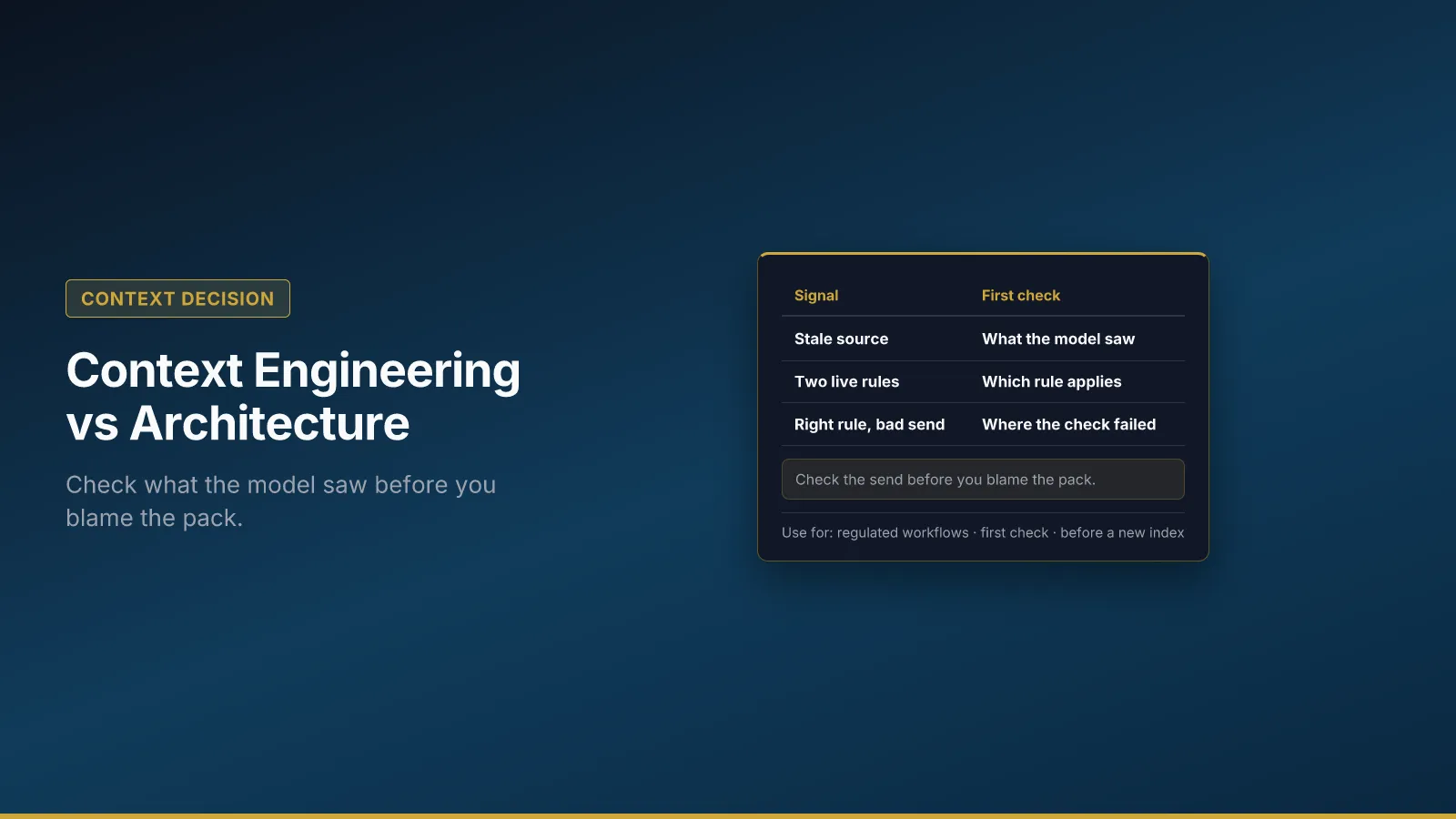
Kitchen-sink context from context window myths increases contradiction rate; architecture beats bigger windows.
Practical mitigations (controls that work)
| Control | Effect |
|---|---|
| Require citations to approved sources | Traceable claims |
| Confidence thresholds + human route | Blocks auto-send |
| Eval cases for known traps | Catches regressions |
| Separate draft from send | Human accountability |
Citations must point to approved source IDs—KB tags, clause library IDs—not “based on best practices.” Thresholds must be calibrated on eval after model changes. Trap cases include policy exceptions, wrong SKU, VIP language—see evaluation hooks. Draft vs send separation is mandatory for regulated customer paths in v1.
Northline added checker step after a draft cited deprecated refund rule—caught before send; eval case added within a week.
Workflow pattern (generate → check → send)
Generate with bounded retrieval per data boundaries. Attach sources used list to draft UI. Run checker prompt or rule engine listing unsupported sentences. Human edits or rejects; log override reason in audit trails. Only then send from operator credentials.
For customer-facing work, never skip send gate because the draft “sounds right.” Sound is not a signal.
Multi-agent setups must not skip checker between specialist steps—handoff pattern with human gate on external actions.
Culture and governance
Leaders praising “great AI drafts” without asking for source IDs train reviewers to rubber-stamp. Forum reviews should sample overrides and near-misses—risk cadence—not only pass rate averages.
Legal owns policy packs; process owners own checker rules; IT enforces retrieval scope. Fluency is a UX problem only after controls exist.
What readers should do next
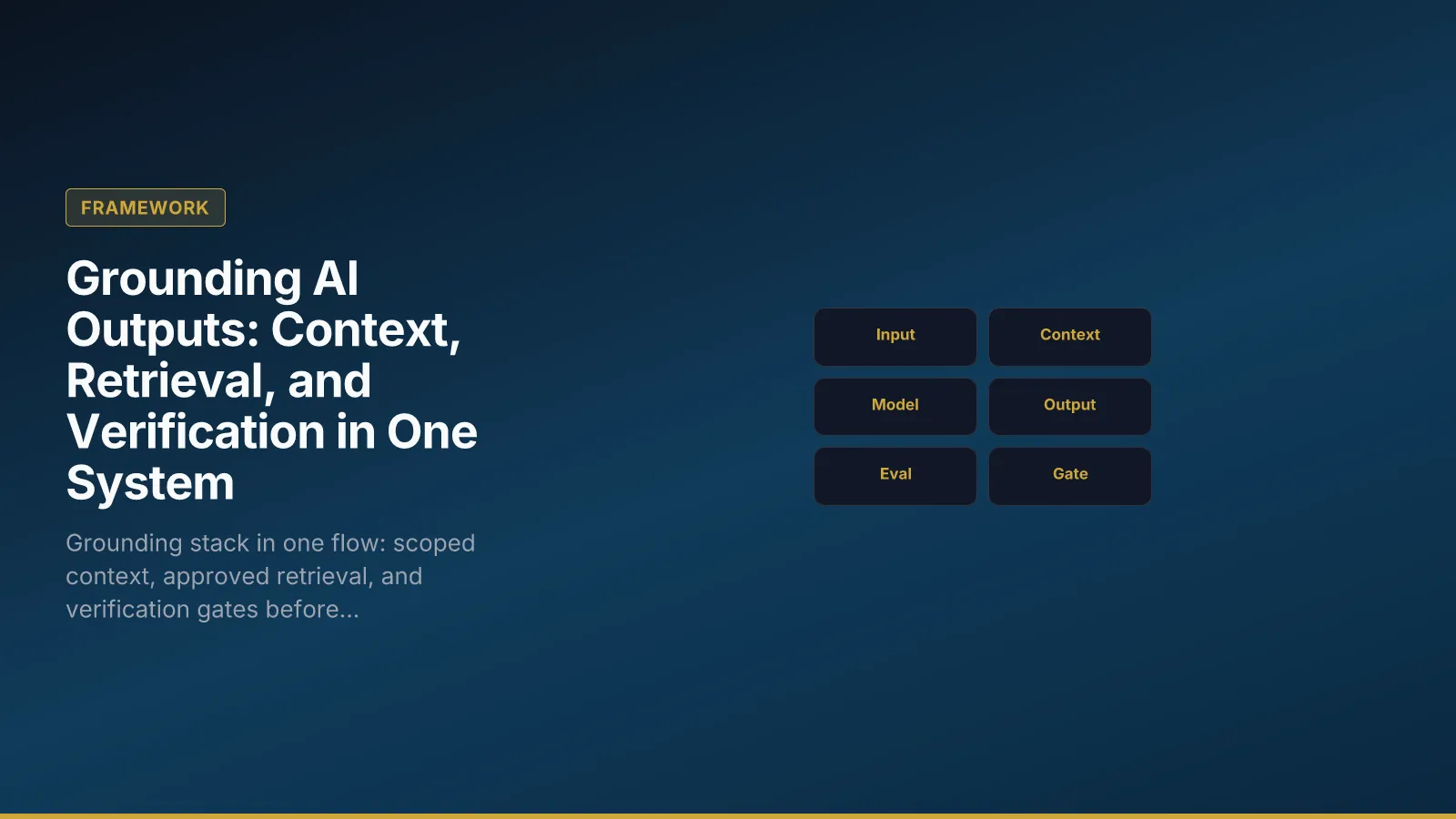
Audit one high-risk workflow: is send possible without citation or checker? Add three trap cases to eval. Log unsupported_claim_blocked for a month. Read Grounding AI Outputs for the full verification system and context architecture for layer design that reduces contradiction.
Confidence is a tone. Accuracy is a system property—you build it with sources, gates, and logs, not hope.