A leaderboard that rejects legal runs destroys trust faster than no leaderboard. Corporate Ladder Soft Launch went live on 2026-06-15 on promptanatomy.lol. The one-thumb loop was already clear—tap left or right, dodge meetings, climb Career Years. What followed was a sprint on UI, UX, visuals, and algorithm until scores behaved under real Telegram traffic. We tagged v2.4.0 in DITreneris/ladder when filing trust caught up to the loop.
The game borrows the same instinct as a one-beat timing climb—one wrong side and the run ends—but the trust problem is eval-gate discipline, not nostalgia. Stack depth stays in Telegram Game Stack; here we document the trust layer players and operators feel after soft launch.
What soft launch did not guarantee
Soft launch was honest about open work: polish, load tuning, and scoring-rule hardening continued, with tagged releases when player-visible math changed. The live field note stopped the rank ladder at CEO (35y); v2.4 extends through Board Member (50y) and Angel Investor (75y), with scores filing up to 100y—late-game satire on the hero, same binary loop, new hazards (Quorum, Runway) without new UI chrome per beat. Full rank milestones live in the soft-launch post and open repo README.
Worse for trust: power-user runs could 400 on submit despite legal play. The Web App showed a strong run; Supabase never got a row. Daily and weekly boards looked thinner than they were—a leaderboard that lies by omission is worse than no leaderboard. v2.4 fixes the definition of accepted before persist, the same discipline we encode in Critique Agent v1.0 for local audits.
The plausibility sprint (run_duration_ms)
Plausibility was the hardest line item. The client throttles taps at 120ms; the API must decide whether a submitted run could have happened in true elapsed time—not just whether the years number looks impressive. Before v2.4, caps tied to unix seconds alone rejected legal fast runs at Manager and Director bands. Hours of device replay, prod logs, and freeze-and-watch passes followed: align rung-rate with the tap floor, add +2s second-bucket slack, then require run_duration_ms (true play time in milliseconds) on every POST /runs.
At v2.4.0, SECURITY.md documents the contract:
| Check | What it blocks |
|---|---|
Session window (run_started_at vs Telegram auth_date) |
Idle-forge and stale initData |
Tap density vs run_duration_ms (120ms floor → ~16.7 rungs/s cap) |
Tap-bot density and impossible climb speed |
Minimum duration floor (rungs × 120ms × 0.85) |
Packed rungs inside too few milliseconds |
| ms vs unix-second consistency (+2s slack) | Forged long duration inside a short session |
End-to-end flow:
Player tap loop → Mini App records run_duration_ms
  → POST /runs (Railway API)
  → plausibility gate (session + density + consistency)
  → accepted: Supabase row + leaderboard refresh + best_score to client
  → rejected: 400 + HR audit toast (no silent drop)
Getting those three clocks—client throttle, unix seconds, true milliseconds—to agree was not a one-line fix. It was the sprint.
What v2.4 ships (player-visible)
Filing UX. Post-run sync chip and best_score on the API response so you see filing state instead of guessing. Rejected submits return 400 + HR audit toast—no silent drop.
Visuals and endgame. Progressive corp-env ghost backdrops shift per floor band without competing with obstacles. Board Member and Angel Investor bands reuse the same left/right discipline; the hero promo card shows Level 6 satire—funding, ego, exit—not a new control scheme. Production friction (CSP, ad hosts, marquee ticker) shipped in the same tag but does not change the trust contract—see the sister repo release notes.
Deploy discipline
Three surfaces must stay aligned when scoring rules change:
- Railway (API) is the authoritative gate—it validates plausibility, writes only accepted runs, and returns structured errors the client can show. Deploy API before mini-app when scoring rules change.
- Supabase holds run rows and leaderboard RPCs—one meaning per schema version.
- Bot stays thin: distribution and Web App chrome, not game rules trapped in aiogram. Stable deep links must point at the current Vercel bundle.
We freeze a commit, run Tier A–C gates in SHIP_GATES.md, update the prod bundle anchor, then cut v2.4.0. Same promotion discipline as Evaluation Hooks for AI Workflows on .blog: define accepted, then persist.
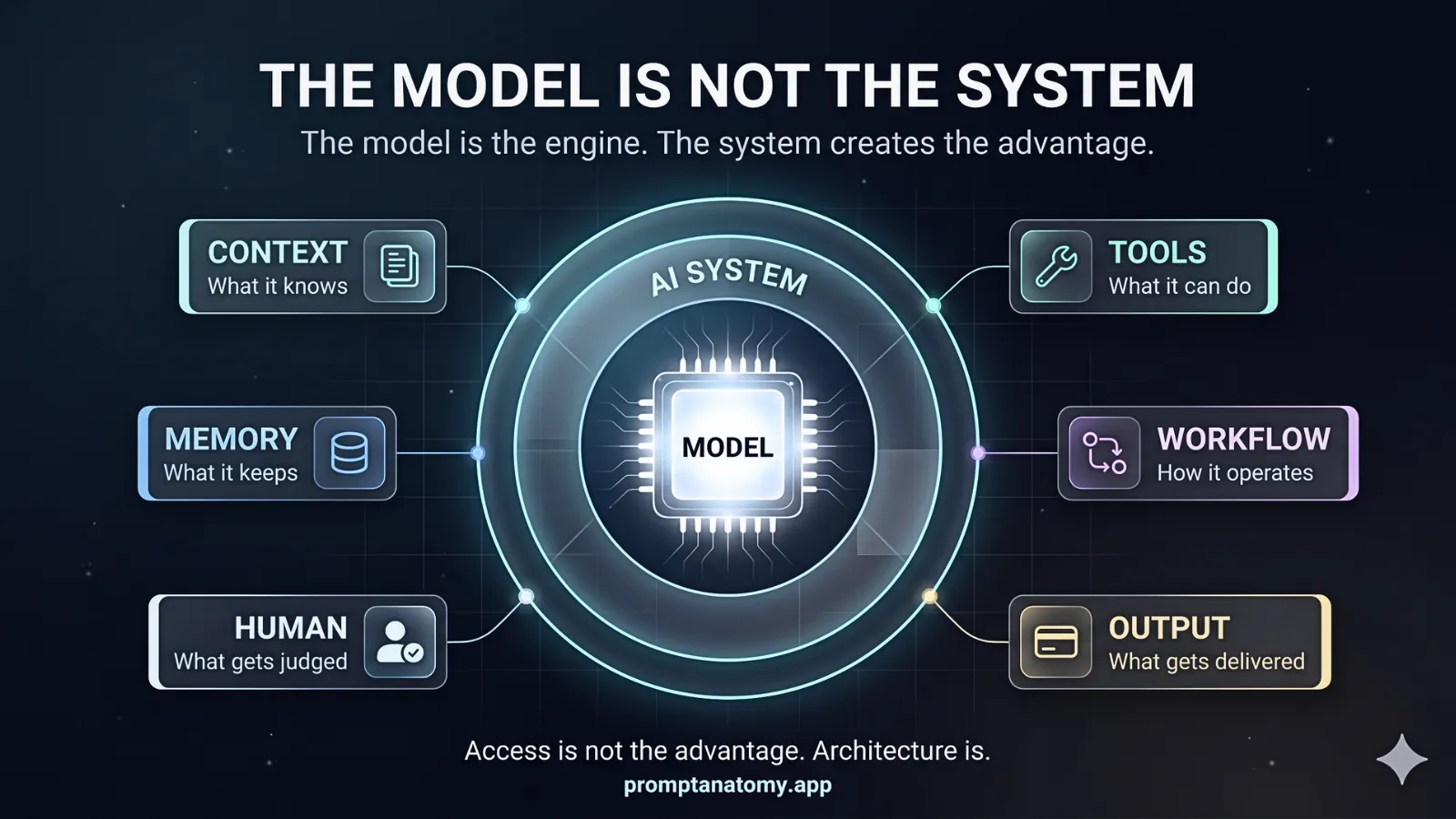
Corporate Ladder v2.4 applies the same boundary discipline we recommend in The Model Is Not the System—thin client, authoritative API, persistent store, separate deploy surfaces. The mini-app displays a run; only the API decides what counts.
Guardrails
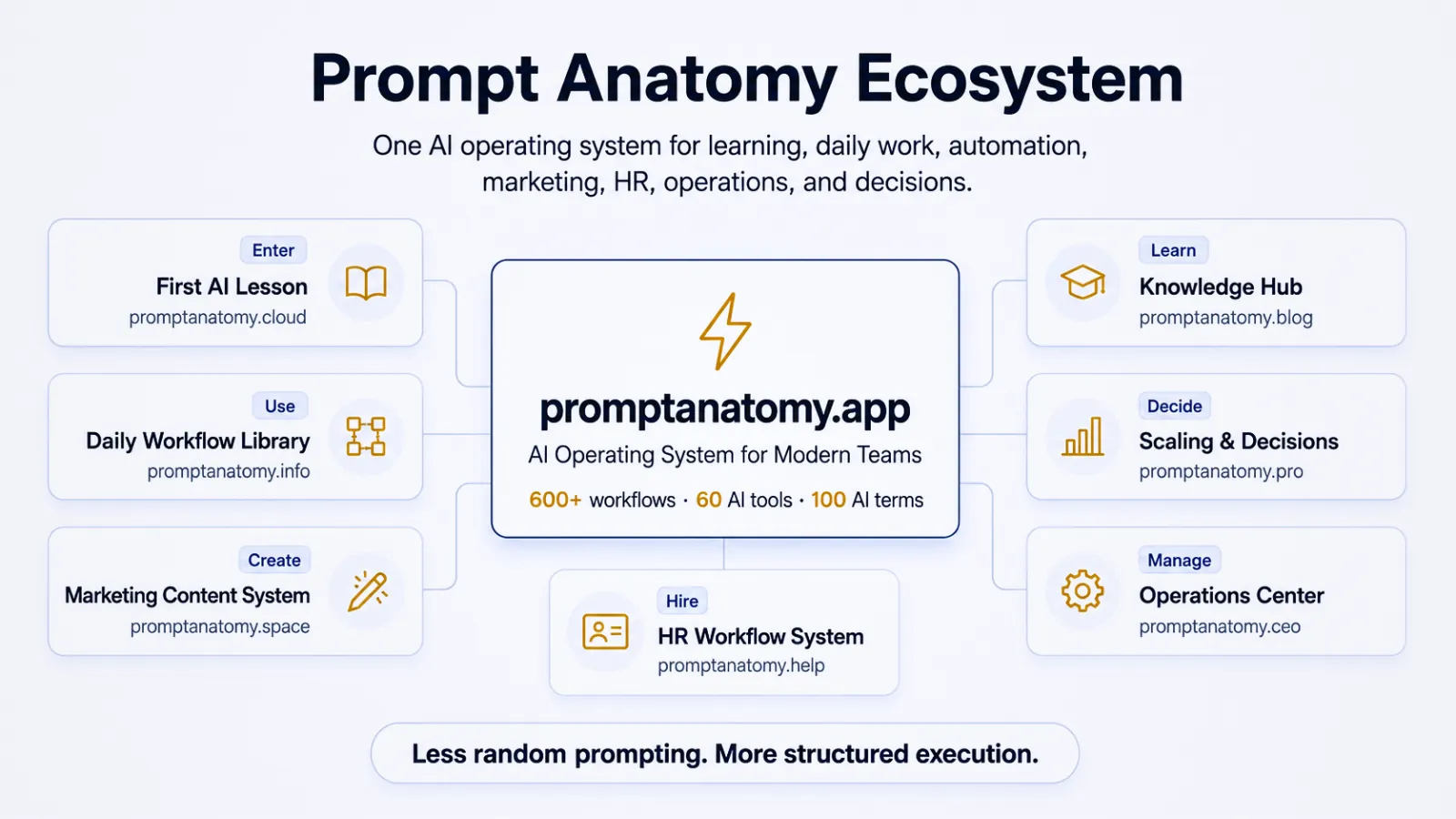
.lol engagement remains optional play, not proof of AI implementation maturity. Do not cite game MAUs or leaderboard rank in procurement decks—redirect sponsors to pass rate and incident cost per AI Procurement Freeze. For where play fits among Prompt Anatomy properties, see The Prompt Anatomy Ecosystem Map.
Play and share
Corporate Ladder is playable at promptanatomy.lol and through @CorporateLadder_bot; it is listed on tApps Center. v2.4.0 is the tag where leaderboard filing earned trust—share a run, challenge a colleague, rematch from the bot deep link. That is the live loop; the core Prompt Anatomy job on .blog remains structured implementation, not high scores in a satirical office game. The same monorepo later served as the cross-repo target for Critique Agent: Field Test—local audits on packages/api run-submit paths, with one finding turned into regression tests instead of a risky refactor.