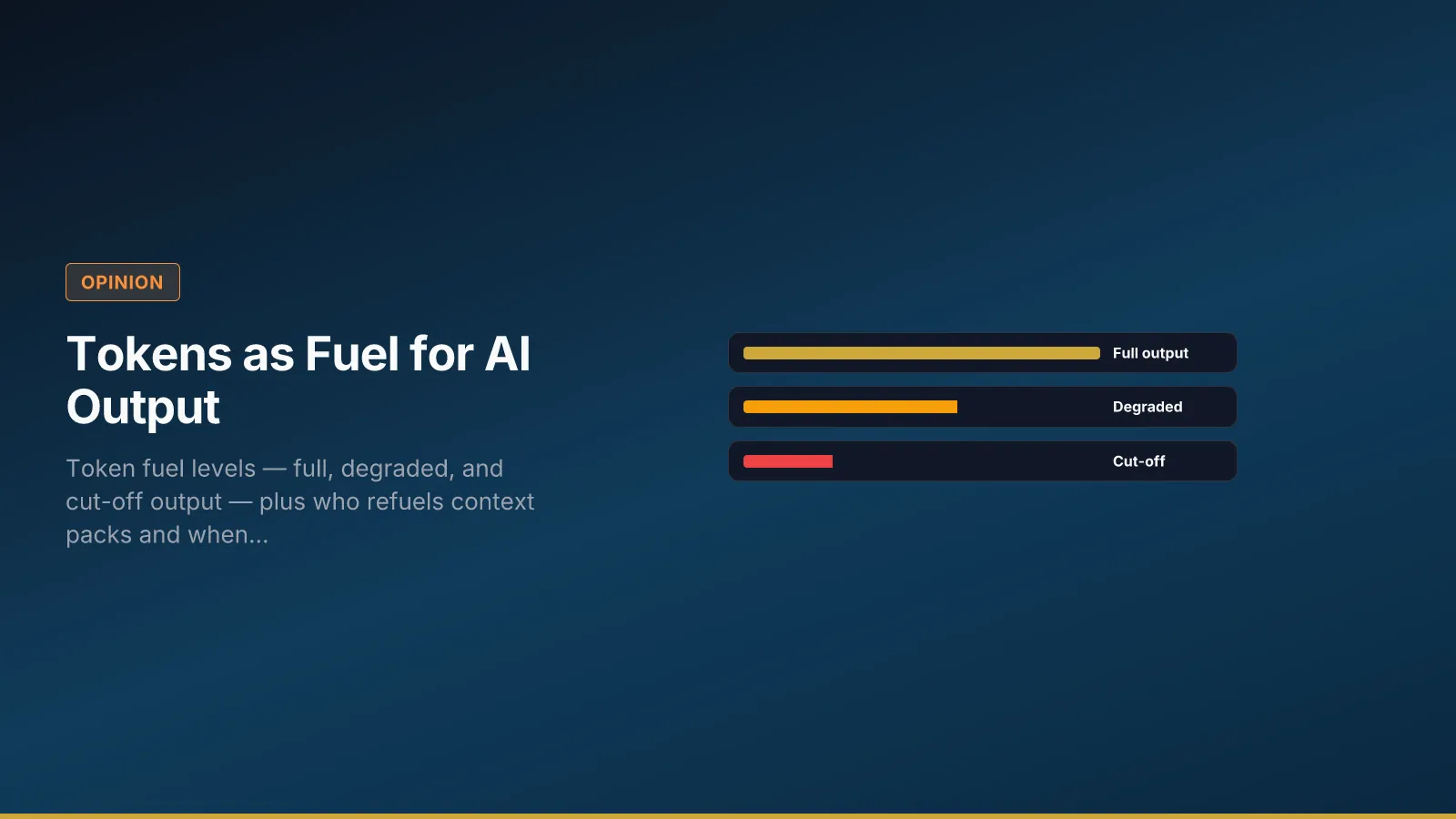
Tokens = fuel. Your prompt runs on this. The diagram shows a tank feeding a model with three output paths: full (clear), low (degraded), empty (cut off). Operators confuse having fuel with pouring in the wrong fuel — or forgetting that someone must refuel on a schedule.
Metaphor primer — for window mechanics see Tokens and Context Window Limits.
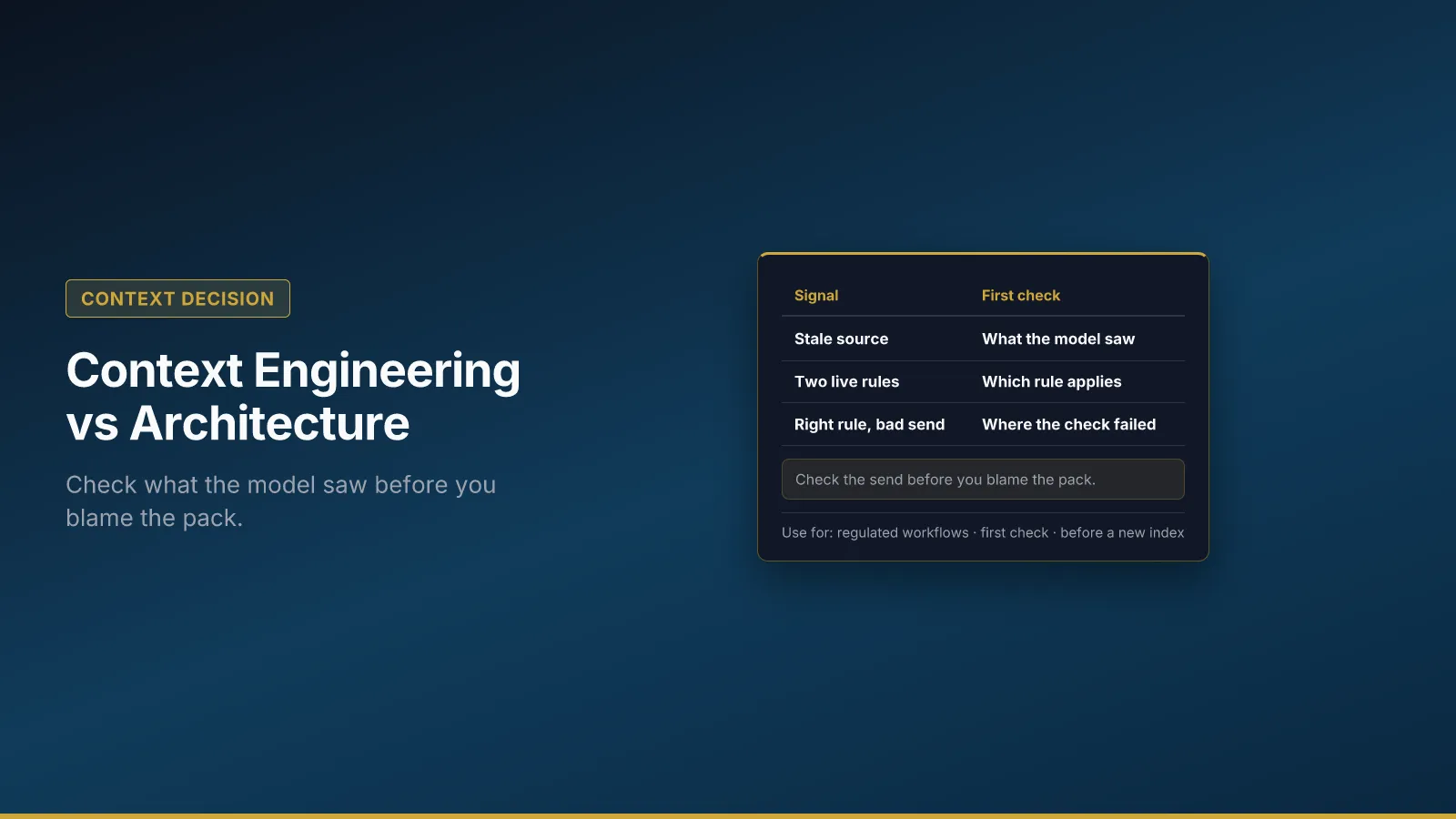
Northline B2B’s support-reply-v3 looked “full” on paper: every run had ticket text, macros, and a long system message. In overflow conditions, the refund-eligibility rule from policy pack v3 dropped out while the draft still read confidently. A tier-two agent approved send because tone and format matched spec — the failure was empty policy fuel, not model IQ.
Full — the right context, not the max context
Full means the run has what the task needs: current policy version, scoped retrieval, output contract, checker rules — without drowning signal in noise. Teams hit “full” with curation, not exports of every PDF in the drive.
Finance should see full tanks as scoped packs with version IDs — not token counts on invoices. When Legal approves policy-pack-v4, that approval is a fuel spec: which clauses, which denial rules, which fields from CRM may enter the tank for this workflow ID.
Low — degraded but tempting
Low fuel is “we probably gave enough.” Format slips; citations thin; tone wanders. Pilots feel “good enough” until a regulated field errors — pricing tier, warranty window, export-control phrase.
Low is a warning to split steps or tighten retrieval, not to bump temperature for creativity. Track override rate alongside token spend: rising overrides with flat pass rate usually mean wrong fuel mix, not insufficient capacity.
Empty — cut off and dangerous
Empty is not only literal token exhaustion. It is missing policy, missing CRM context, missing denial rules — while the model still produces text. Cut-off outputs fail quietly in busy queues because fluency masks absence of ground truth.
Treat silent policy drop as an incident class. Log pack version hash per run so replay shows what fuel was actually in the tank — see Audit Trails for AI Workflows.
Refueling workflow
Context updates are releases, not sidebar edits. Assign explicit ownership:
| Activity | Cadence | Owner | Eval trigger |
|---|---|---|---|
| Policy pack bump | When Legal publishes | Process + Legal | Smoke eval on 10 cases |
| Retrieval index refresh | When corpus version changes | IT + domain lead | Held-out pass rate diff |
| Macro / template edit | Per change request | Process owner | Regression on near-misses |
| Model or temperature pin | Per change control | IT + quality | Full smoke set |
Use the AI Change Log Template so refueling events are searchable in incident review — not buried in chat history.
More tokens is not more control
Buying capacity without governance increases cost and hallucination surface. Pair this visual with Grounding AI Outputs for verification, What Is Context Architecture for layer design, and Memory Types for AI Systems for what should not sit in every run’s tank.
Fuel without an engine map wastes money. The Model Is Not the System shows where generation sits in workflow — and who owns refueling over time.