Teams buy “AI training” and get ninety minutes of slides. The room nods. Monday morning, everyone vibes again—no shared prompt shape, no owned next step, no evidence anyone can redo the work alone. Enablement did not fail for lack of content. It failed because the opener was speaker-paced instead of instrument-paced.
I started in PR and speaking training in 1999 and spent about twenty years in corporate houses—more doer than lecturer. After rooms where stories outran the topic, and knowing adults read faster than speakers narrate, I built systems where people learn by doing everyday tasks. Interactive demos remove the lecturer bottleneck. Facilitators still set the task, own the handoff, and keep governance honest.
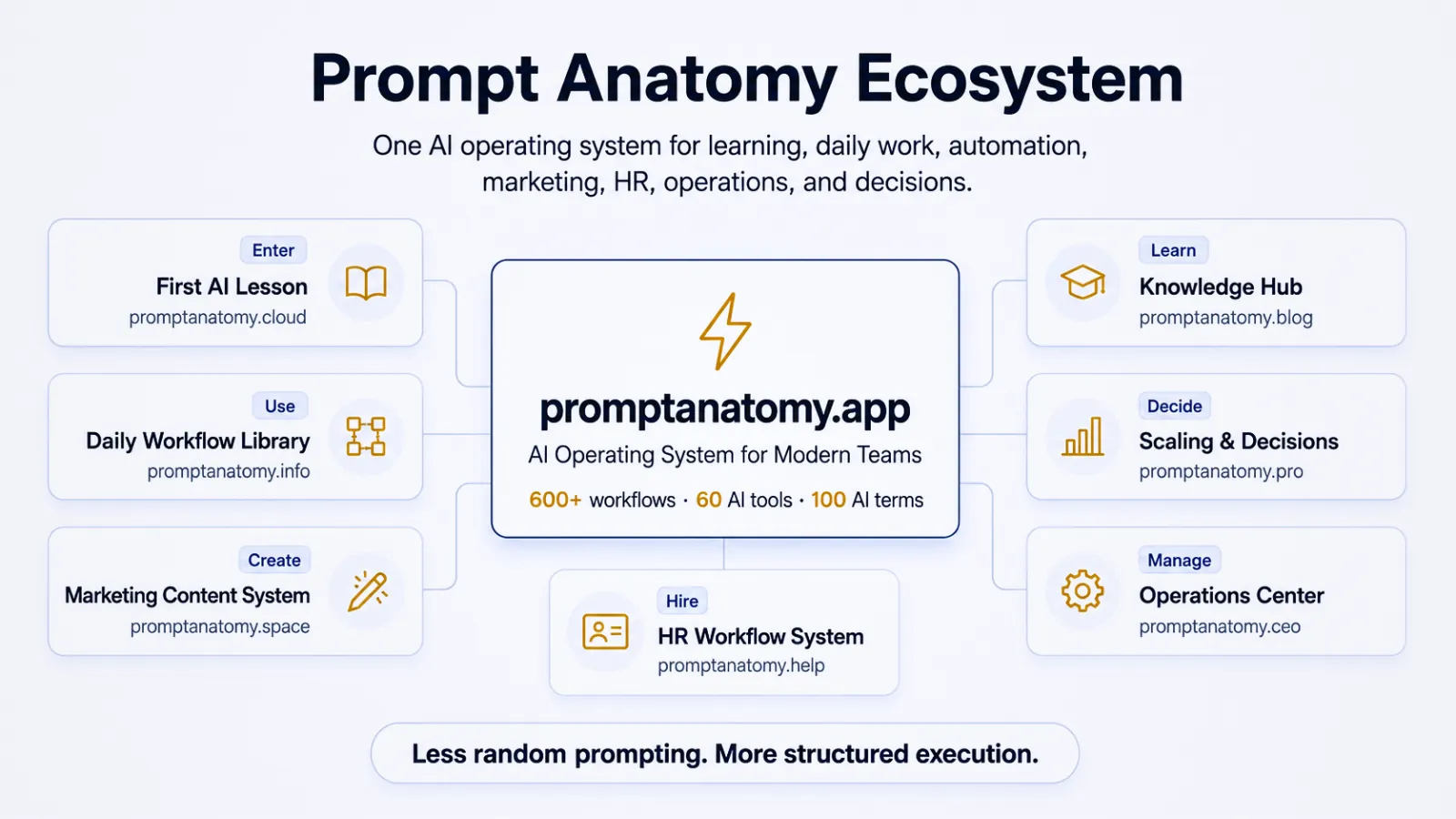
The public composite is promptanatomy.site—map, Anatomizer, maturity quiz—documented in Prompt Anatomy Marketing Site Launch. What follows is how to run those instruments in the room. For the full property map, start with The Prompt Anatomy Ecosystem Map.
Instruments by job in the room
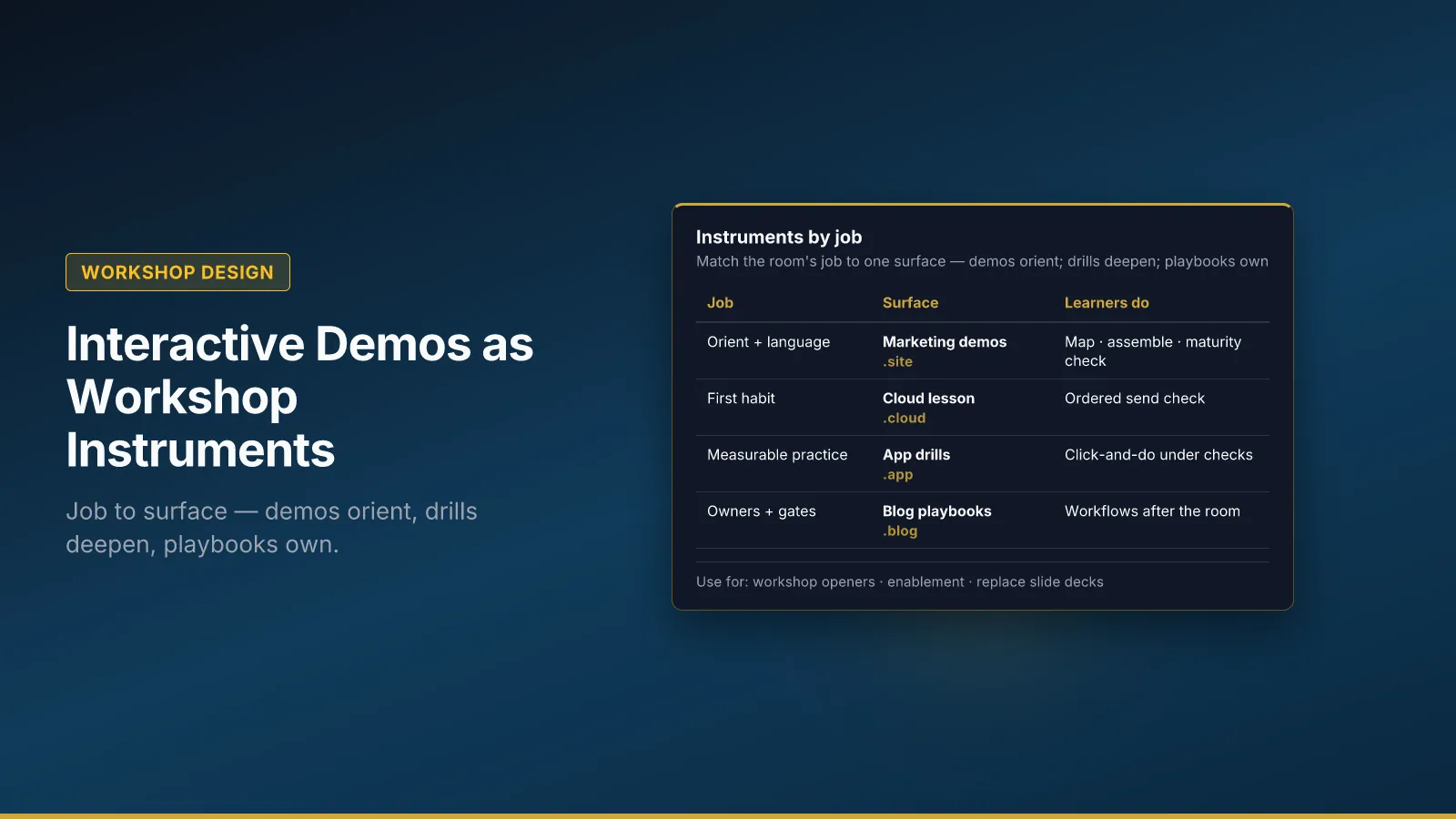
Pick the surface by what the room must do, not by which URL sounds impressive. Orientation, first habit, measurable practice, and post-room ownership are different jobs—each needs a different surface. Mixing them—selling depth practice as orientation, or a quiz export as an owned workflow—leaves Monday on vibe prompting.
Match one job to one surface for this sitting alone; stop selling the rest of the stack until that move is done.
| Job in the room | Surface | What learners do |
|---|---|---|
| Orient + shared language | .site |
Map one domain, assemble one prompt, run a quick maturity check |
| First habit (review before depth) | .cloud |
Ordered lesson with a send check before template depth |
| Measurable practice | .app (Modules 1–6) |
Click-and-do under checks |
| Owners and gates after the room | .blog |
Playbooks and worksheets |
Quick Send Check First teaches why journey order is the lesson on the enter spoke. Click-and-Do Before Slide Decks owns depth practice on the training hub. This article owns the workshop opener.
A twenty-five-minute opener
Steal this agenda. The sequence is the lesson: orient → assemble → diagnose → route. Without a shared domain map, Anatomizer is a tour. Without one messy prompt for everyone, structure never replaces one-shot chat. Without a handoff, Monday returns to vibe.
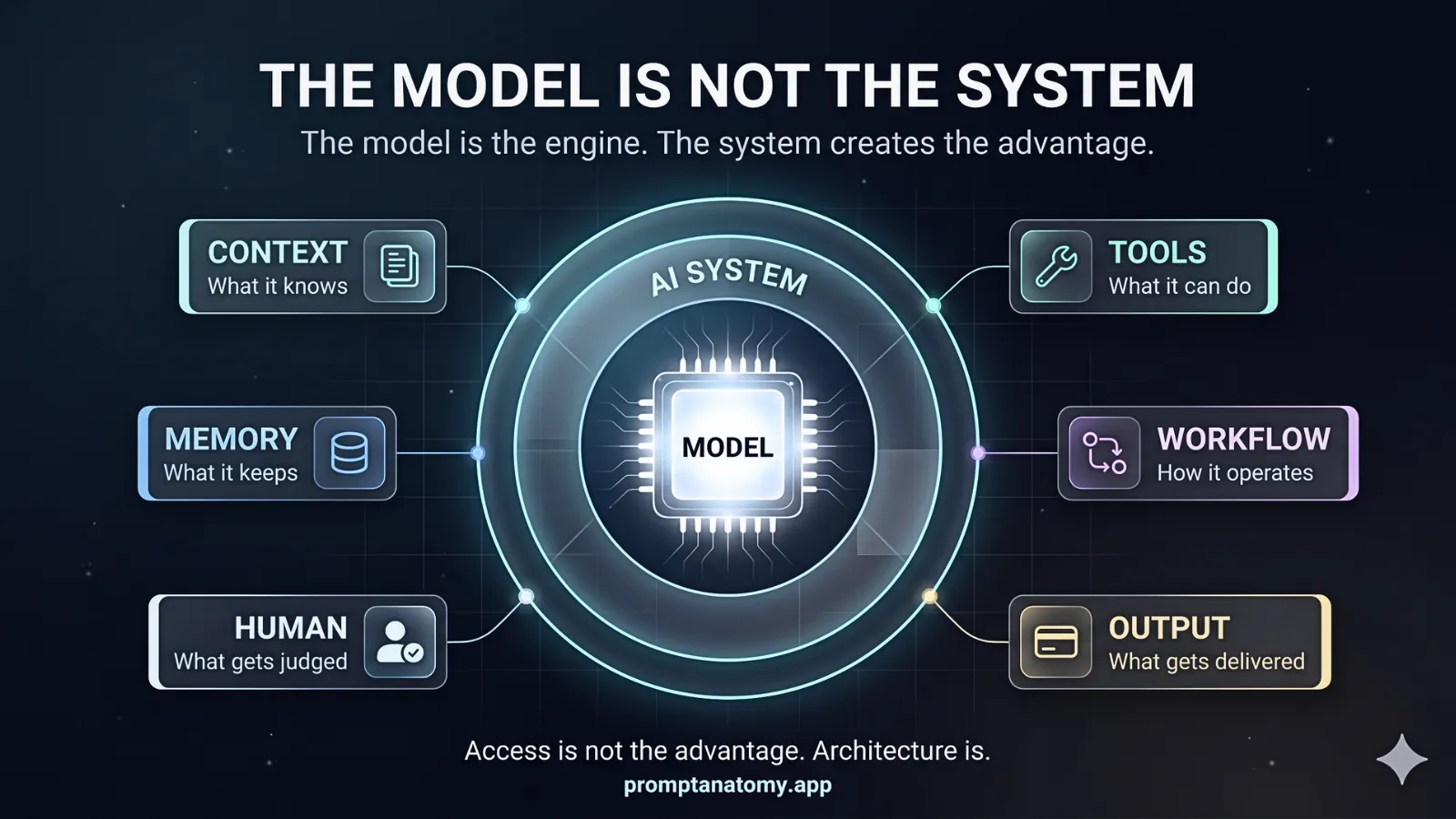
Keep one shared artifact—status email, meeting brief, or analysis ask. Name the framework after they feel the friction. If they can read the point in thirty seconds, do not narrate it for eight. One short story beat, then back to the instrument. Learners paste into ChatGPT, Claude, or Gemini—assembly is not execution; see The Model Is Not the System.
| Time | Move | Why it teaches |
|---|---|---|
| 0–5 | Ecosystem map — one domain the room cares about | Shared “where we are” without a property tour monologue |
| 5–15 | Anatomizer — same messy work prompt for everyone | Structure replaces one-shot chat in the room |
| 15–20 | Team Assessment | Diagnosis without a forty-minute maturity lecture |
| 20–25 | Hand off to .cloud, .app, or one .blog playbook |
Demo ends; an owned next step begins |
What interactive practice returns — Cgates
At Cgates, we ran two Prompt Anatomy sessions with about forty analytics and programming practitioners. After Modules 1–6, I asked how much worktime they automated on real tasks. One analyst said multi-day analysis dropped from roughly four days to one. Another said BI graphs that took about eight hours now took about twenty minutes. Not a vendor ROI slide—after practice on everyday work, people report time back, not slide applause.
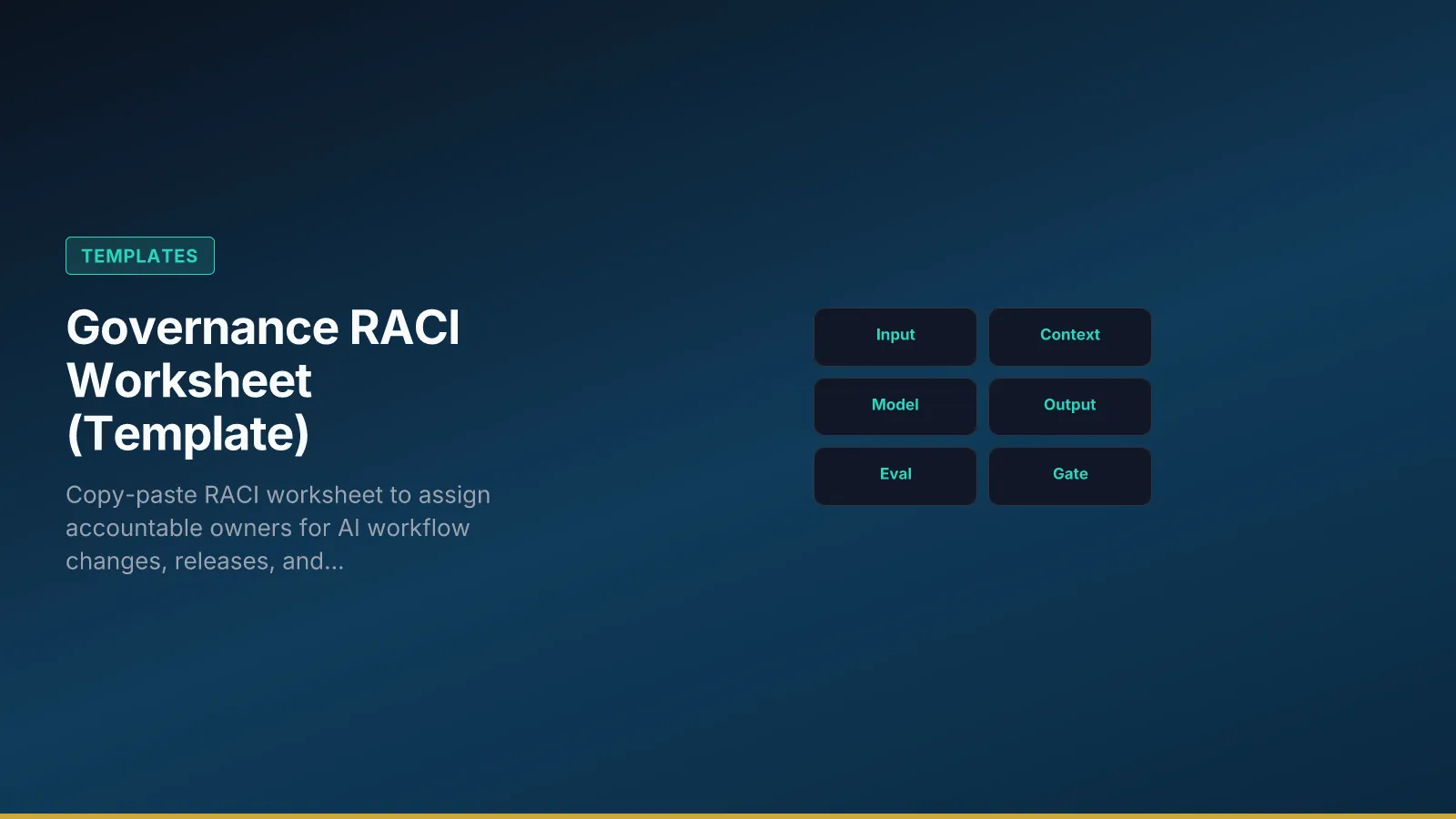
Those savings are still practice outcomes, not production maturity—they do not replace workflow IDs, RACI, or eval gates. Measure outcomes on owned workflows per From Prompts to Business Outcomes; do not paste demo copy into procurement decks per AI Procurement Freeze.
Guardrails
Treat interactive demos as orientation and skill loops, not as certificates of governance. A quiz tier or Anatomizer export does not replace a documented workflow ID, owner, or eval pack. Workshop applause and demo exports do not belong in procurement forums—cite pass rate, cycle time, or incident cost on real work instead.
Demos do not replace post-launch rituals. Keep workflows honest with Team Rituals for AI Implementation after the room empties. Open with instruments, then hand off a next step they can finish without another lecture.