The Prompt Anatomy marketing site went live on 2025-04-12 at promptanatomy.site. It is the official discover-and-try surface for the nine-domain AI operating system—less random prompting, more structured execution. Source and deploy details live in the open sister repo DITreneris/site: a static Vite + React SPA on Vercel with no backend, auth, or CMS.
This article is a field note on what shipped, how the three interactives work, and where .site sits relative to governed implementation work on .blog and practice on .app.
What promptanatomy.site is
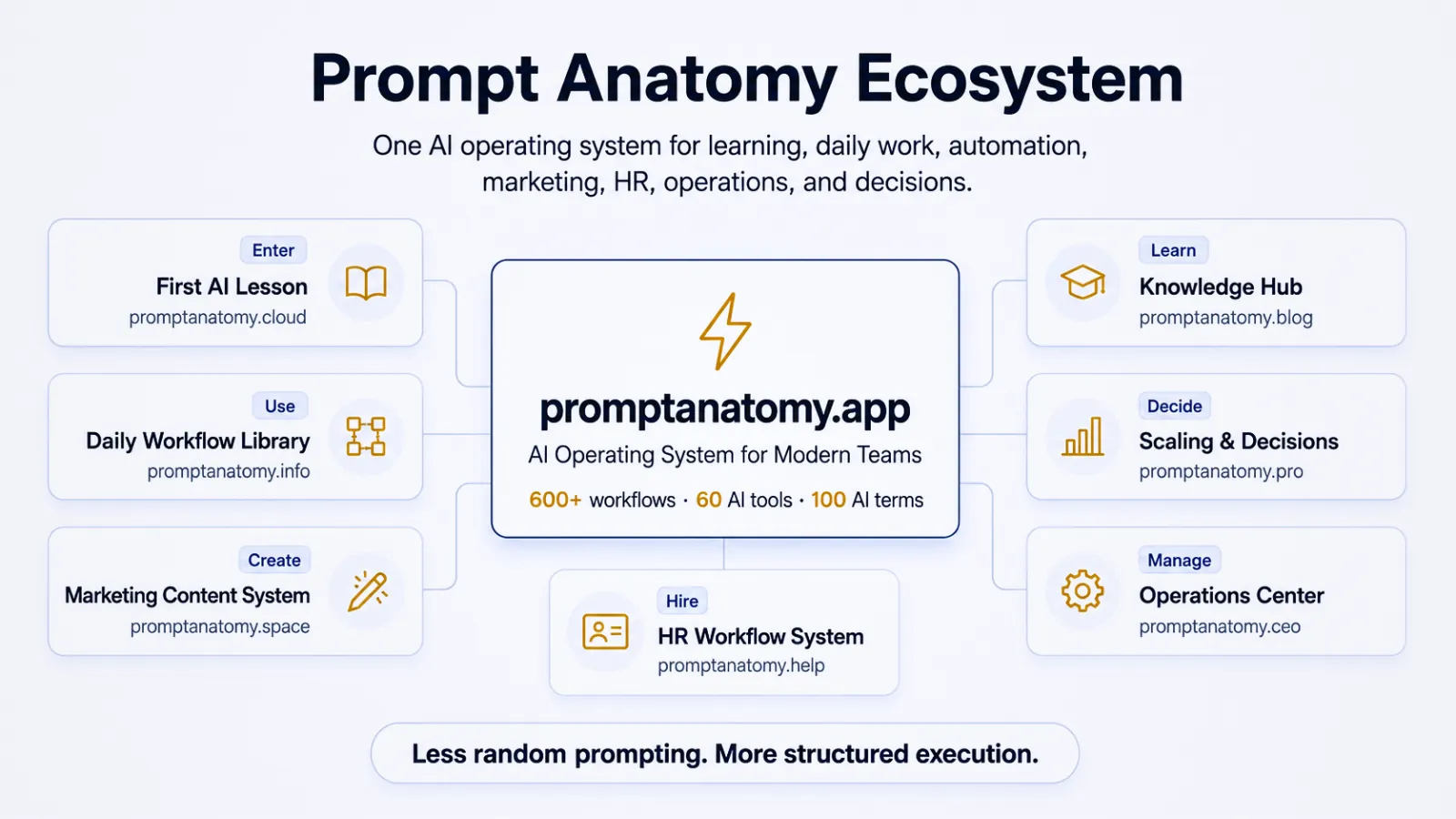
promptanatomy.site is the marketing and demo layer for Prompt Anatomy. It explains the ecosystem story, lets visitors assemble a prompt in five layers, and returns a maturity tier in under a minute. It is not the knowledge hub—that is promptanatomy.blog (this site), where frameworks, governance playbooks, and templates live in long form. It is also not the training checkout—that is promptanatomy.app, where drills and methodology modules turn reading into repeatable team practice. The Anatomizer assembles prompts; ChatGPT, Claude, and Gemini execute them—see The Model Is Not the System.
If you are mapping properties for the first time, start with The Prompt Anatomy Ecosystem Map. For Platform HQ ship details—checkout, magic-link access, and six-module training—see Shipping Prompt Anatomy. For the Enter spoke after discover-and-try—first AI lesson and quick send check—see Quick Send Check First. The marketing site fills the gap between “what is this brand?” and “I need the RACI worksheet now”—orientation before depth.
Three shipped interactives
The live build centers on three tabs builders and sponsors can click through in one sitting:
Ecosystem journey map
The Ecosystem tab is a phase-driven map across Enter → Use → Create → Hire → Manage → Decide → Deepen → Play. Selecting a domain opens a detail panel with role, outcome, and link to the vertical product (.cloud, .info, .space, and the rest). The map answers “where does this URL fit?” without copying playbook prose from the blog.
Prompt Builder (Anatomizer)
The Prompt Builder is an interactive five-part Anatomizer: Persona, Context, Variables, Instructions, and Constraints. Visitors compose layers in the browser and see how structure replaces one-shot chat. The builder teaches shape, not registry discipline—production prompts still need owners, version IDs, and eval cases documented on .blog.
Team Assessment
The Team Assessment is a 60-second maturity quiz. It returns a tier result and a recommended domain to explore next. Useful for workshop openers and sponsor alignment; not a substitute for 10 Signs Your Company Is Vibe Prompting or a procurement readiness review.
Together, the three surfaces give a coherent first visit: map the system, try structured prompt assembly, gauge where the team sits—then link to the article that matches the diagnosis.
The chain the site sells
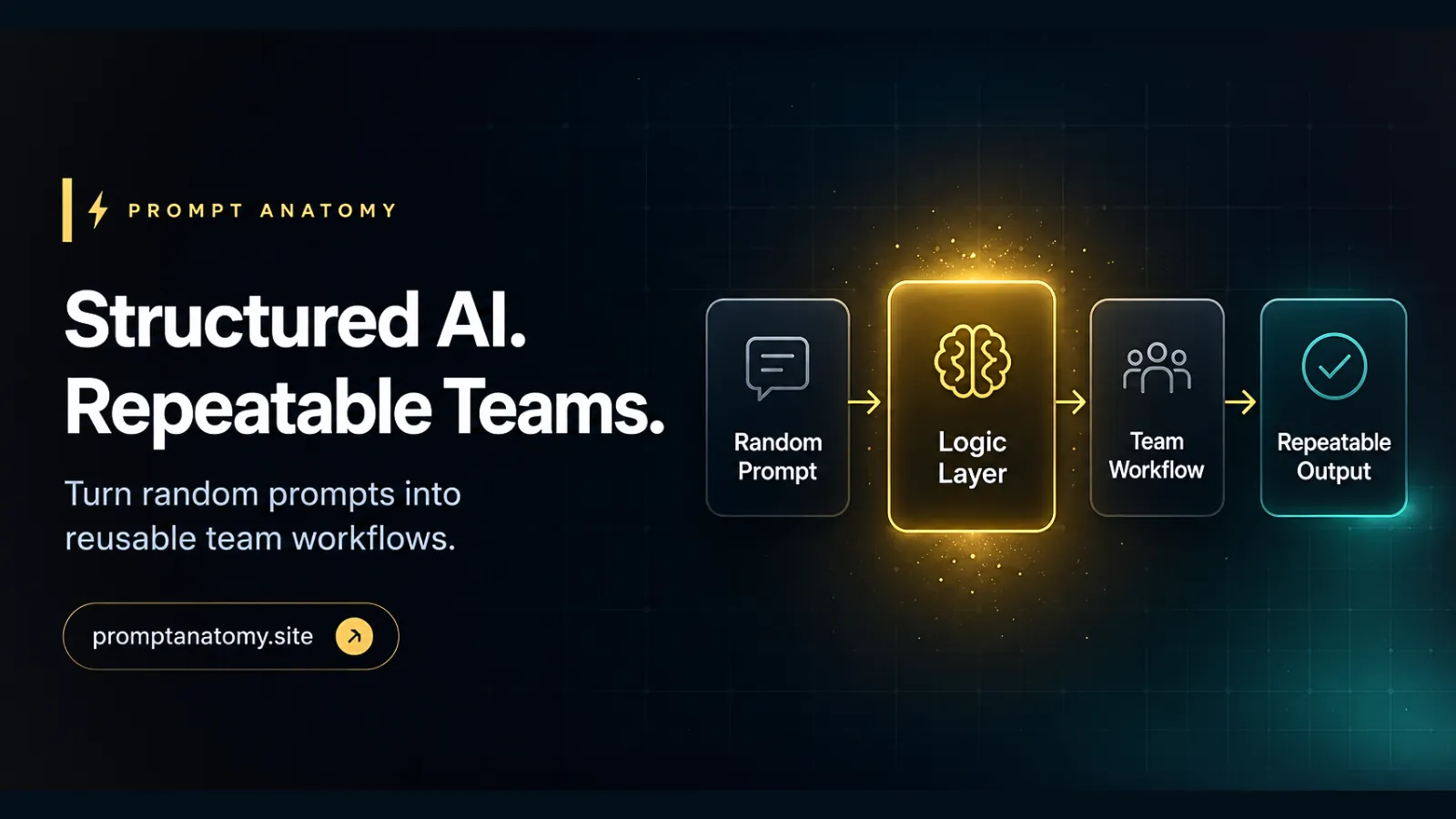
The launch hero encodes the same chain the site sells: Random Prompt → Logic Layer → Team Workflow → Repeatable Output.
Random prompts produce inconsistent quality and unclear ownership. The logic layer is where Persona, Context, Variables, Instructions, and Constraints turn chat into a designed artifact. A team workflow assigns that artifact to a named process with eval gates and handoffs. Repeatable output is what sponsors fund—not another impressive demo.
That progression mirrors how we write on the blog: diagnose chaos, design structure, operationalize. For the blueprint behind the logic layer, see Structured Prompt System Blueprint. For outcome framing before you buy training, read From Prompts to Business Outcomes.
Where to open the properties
| Surface | URL |
|---|---|
| Marketing site | promptanatomy.site |
| Platform HQ | promptanatomy.app |
| Repository | github.com/DITreneris/site |
The stack is intentionally thin for a marketing SPA: Vite 8, React 19, TypeScript, Tailwind CSS v4, and lucide-react icons. Open Graph, sitemap, and WebSite schema ship from the repo; Organization schema and pricing CTAs stay on .app per the sister project’s SEO split. Builders who want local dev: npm install, npm run dev (port 5173), npm run build—details in the repo README, not duplicated here.
Launch guardrails
Treat .site engagement as discover and try, not proof of implementation maturity:
- A quiz tier or Anatomizer export does not replace a documented workflow ID, RACI, or eval gate pack on your side.
- Do not paste marketing-site copy into procurement decks; link the relevant playbook on
.blogand cite pass rate, cycle time, or incident cost on real workflows. - Interactive demos are orientation; governed production still lives in registry discipline, audit trails, and the playbooks this blog publishes.
promptanatomy.site gives strangers a structured front door. The job of this blog remains turning that curiosity into repeatable, owned AI workflows—and .app into team practice when you are ready to standardize.