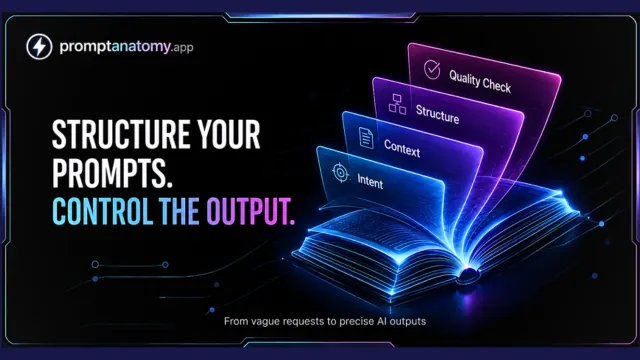
Teams buy “AI prompt training” and receive slide decks. On promptanatomy.app, we ship the opposite: click-and-do modules where learners run prompts, pass checks, and earn certificates—not passive slides.
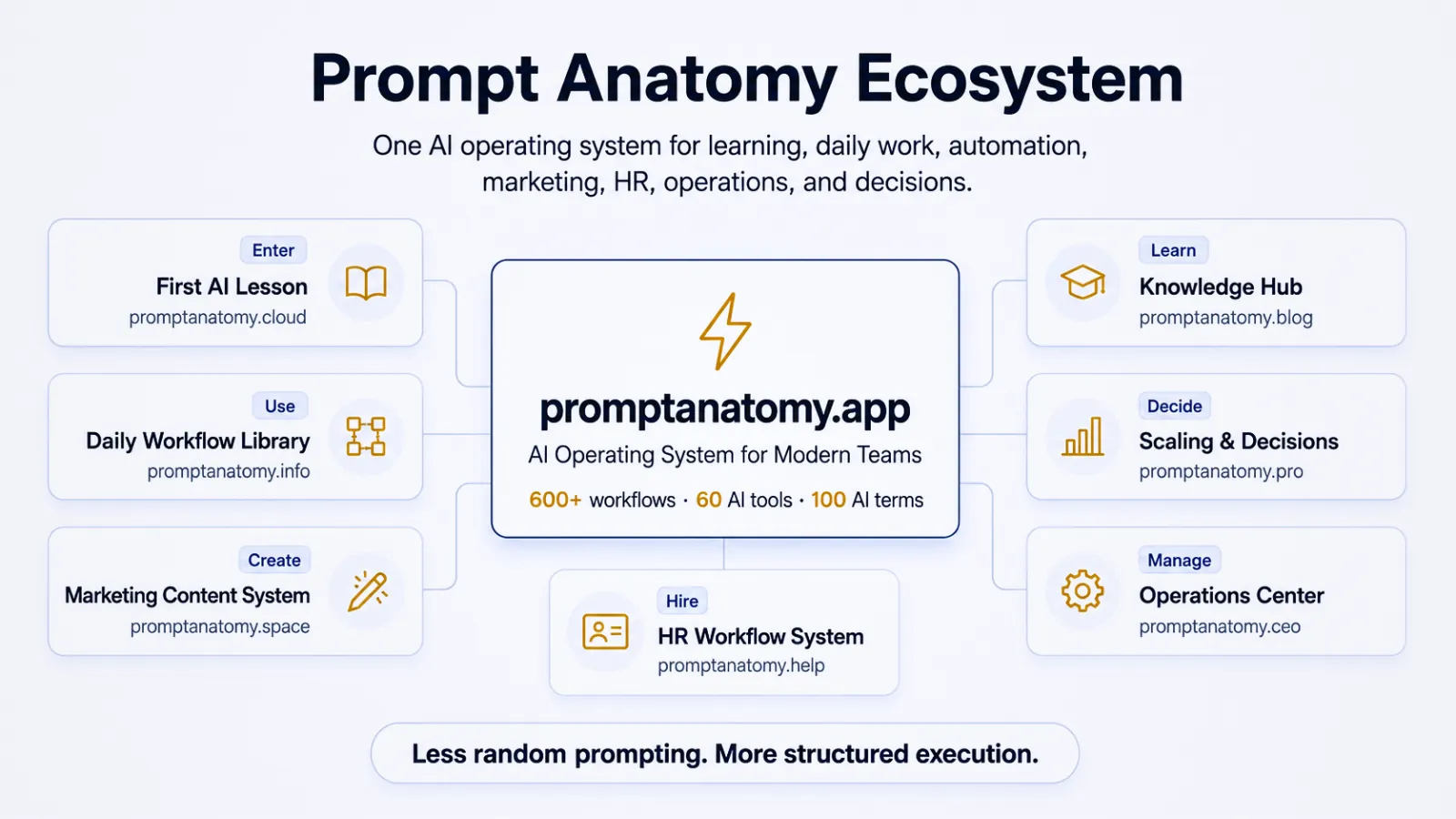
In early July 2026, Prompt Anatomy shipped v1.4.2 on promptanatomy.app—the M7-9 Data Analysis path for Core buyers after the foundation modules. Stripe still sells Starter and Core only; M7–9 is an operator grant, not a checkout SKU. For hub checkout and the catalog split, see Shipping Prompt Anatomy. For the property map, start with The Prompt Anatomy Ecosystem Map.
How M7-9 access works
Who: Purchasers of the Core plan, Modules 1–6, on promptanatomy.app.
Offer: M7–9 as an operator grant. This is not a Stripe plan and not a public price change.
Request: Email info@promptanatomy.app with subject M7-9 grant, your purchase email, and LT or EN locale.
Starter-tier buyers, Modules 1–3, need Core first. The path assumes six-block fluency before data-analysis specialization.
Click-and-do beats slide-first
Decks teach block names; they rarely teach when to verify a number before it reaches a client. Analysts copy polished outputs into email and dashboards, then invent metrics at scale. That failure mode is vocabulary without judgment.
Twenty years in classrooms and enablement taught one rule: adults learn when they do something measurable in under three minutes, not when they admire a deck. Duolingo and Udemy get one thing right: micro-loops and gated depth. We borrowed the pattern, not the gamification: short sessions, copy-run-check, certificates at a threshold, and PDF handouts for transfer, not streaks or leaderboards as proof of maturity. For the free workshop opener before modules—map, assemble, diagnose on .site—see Interactive Demos as Workshop Instruments.
| Pattern | Learner action | Bloom level | Where in training |
|---|---|---|---|
| Micro-loop | Choose, then get immediate feedback | Remember / Understand | M2 check, quiz gate |
| Copy-and-run | Fill blocks and run in a real AI tool | Apply | M3 business scenarios |
| Branching path | Pick analytics focus and see different slides | Analyze | M7 core plus four thematic branches |
| Gated test | Reach 70% or higher to unlock certificate tier | Evaluate | M8 to Tier 3 certificate |
| Capstone | Produce a MASTER PROMPT and 8-step workflow | Create | M9 dominant path |
| Offline transfer | Download a PDF handout, not another slide | Transfer | M1, M5, M6, and M7-9 handouts |
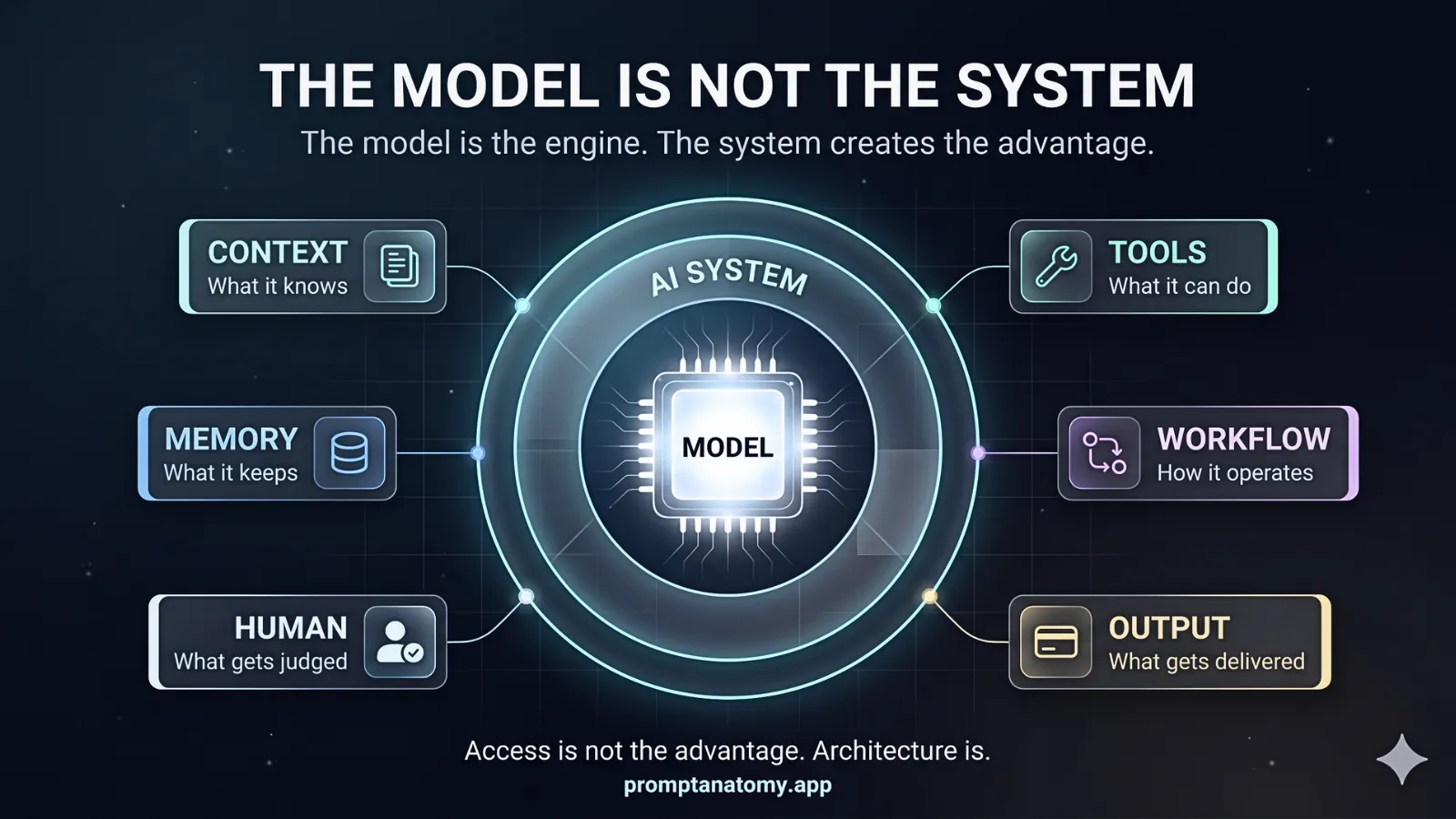
The lesson host teaches assembly; ChatGPT, Claude, and Gemini execute. That wedge is the same rule as The Model Is Not the System: training is not your production runtime.
What M7-9 covers
Modules 1-6 teach the six-block prompt system, the foundation every other path assumes. M7-9 is the production data-analysis specialization: pipeline thinking, data preparation, visualization choices, anti-hallucination habits, and a capstone that forces an eight-step workflow instead of a one-shot summary.
M7 opens with a focus choice: visualization, ethics-plus, technique, or strategy. Learners move through a shared core plus thematic branches, which creates rerun value without a second product. Interactive diagrams cover analysis types, data prep, agent triads, and the data-story cycle; static SVGs became step-navigable React diagrams in v1.4.2.
M8 is the knowledge check that gates Tier 3 certification. M9 centers on a MASTER PROMPT workflow with extended scenarios for teams that want volume practice. Depth on grounding and retrieval belongs on .blog: see Grounding AI Outputs and RAG in Production. The training app links outward through ecosystem deepen moments instead of copying those playbooks into slides.
What soft launch does not guarantee
Soft launch acknowledges open work. v1.4.2 is a readability and diagram-trust sprint on the shipped M1–9 training code (checkout is still Starter/Core only; M7–9 is an operator grant), not a promise that every interactive schema has passed full manual browser QA. Modules 10–12 (agent engineering) are a tester grant for existing buyers—see 3A Before You Build an Agent. They are not a Stripe plan.
What soft launch does guarantee is a complete M7-9 path: adaptive focus branches, an M8 knowledge check, an M9 capstone workflow, a Tier 3 certificate path at 70% or higher on M8, and DiagramKit-style step navigation across M1-9 so diagrams behave like instruments, not wallpaper.
What v1.4.2 changed for learners
Tag v1.4.2 (2026-07-01) prioritized M1-9 learner-visible polish:
- DiagramKit - shared step badges, explanation panels, keyboard-safe navigation, and dark-mode diagram palettes, especially for the M7-9 pipeline and data-story cycle.
- Design system - clearer CTA hierarchy, 44px touch targets, and less layout jump on first paint because theme and font loading stabilize before React mounts.
- EN/LT editorial sweep on M7-9 - hybrid-language strings removed from the EN locale and Tu-form consistency tightened in LT.
- PDF - a two-page Data Analysis path handout in LT and EN on M9 completion, using the shared handout layout.
The Northline mistake
Northline’s enablement lead celebrated strong Module 3 certificate pass rates while a regional sales deck went out with a fabricated pipeline conversion figure. Nobody had practiced the M7 habit: sources named, structure explicit, human verify before external send. The fix was not fewer certificates; it was making analyze-before-create the mandatory bridge between foundation modules and analytics work. That maps to 10 Signs Your Company Is Vibe Prompting when teams treat training completion as ship-ready governance.
Launch guardrails
Treat .app progress as practice and purchase, not proof of enterprise implementation maturity:
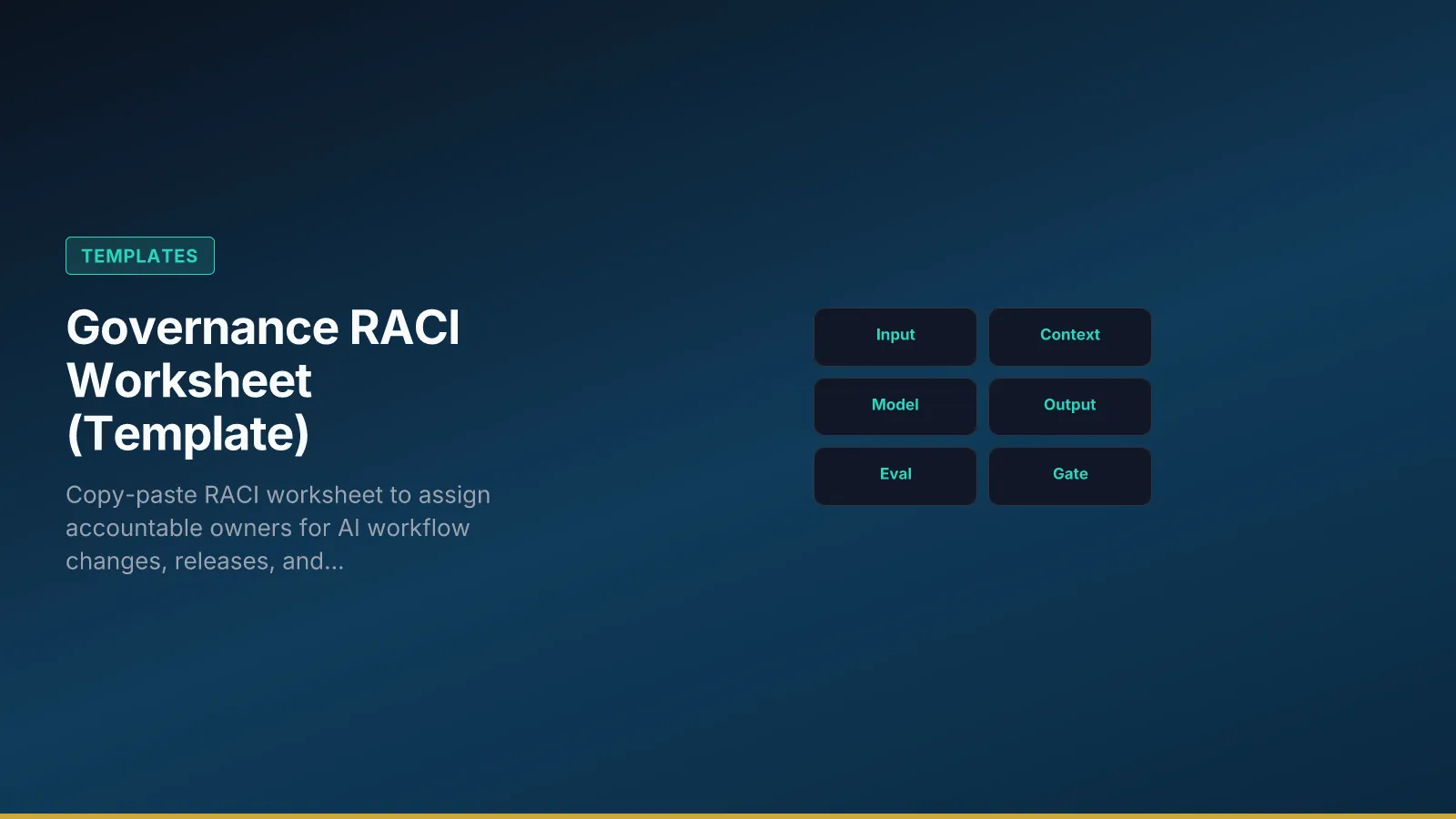
- A Tier 3 certificate or finished M9 capstone does not replace a documented workflow ID, RACI, or eval gate pack. Use Evaluation Hooks for AI Workflows on real workflows.
- Do not paste training copy into procurement decks. Cite pass rate, cycle time, or incident cost on owned workflows per AI Procurement Freeze.
- Graded scenario answers and go-to-market experiments stay inside the app—the same boundary as governed content on
.blog. - Free spokes (
.cloud,.info,.site) complement training; they do not replace Core when you need the full six-block path plus analytics depth. Enter-spoke habit-before-scale lives in Quick Send Check First.
The v1.4.2 ship recorded where learners hesitate, where diagrams teach faster than prose, and where the Data Analysis path still needs a pass. If you are a Core buyer and want the M7–9 grant, email info@promptanatomy.app with subject M7-9 grant.
Part 1 — soft launch. What those signals produced—six org-role paths on Module 7 in v1.4.7—is in Role Paths Before Generic Analytics. Part 3 is gated agent practice: 3A Before You Build an Agent.