An agent drafting a new proposal retrieves last quarter’s thread. The client thanked the team for a PDF that already went out. The agent copies that outcome onto this job and treats the email as sent. The thanks were real. They belonged to the previous proposal.
What each field may do
These roles can live in one record. The split is use, not a second database.
| Role | Rule |
|---|---|
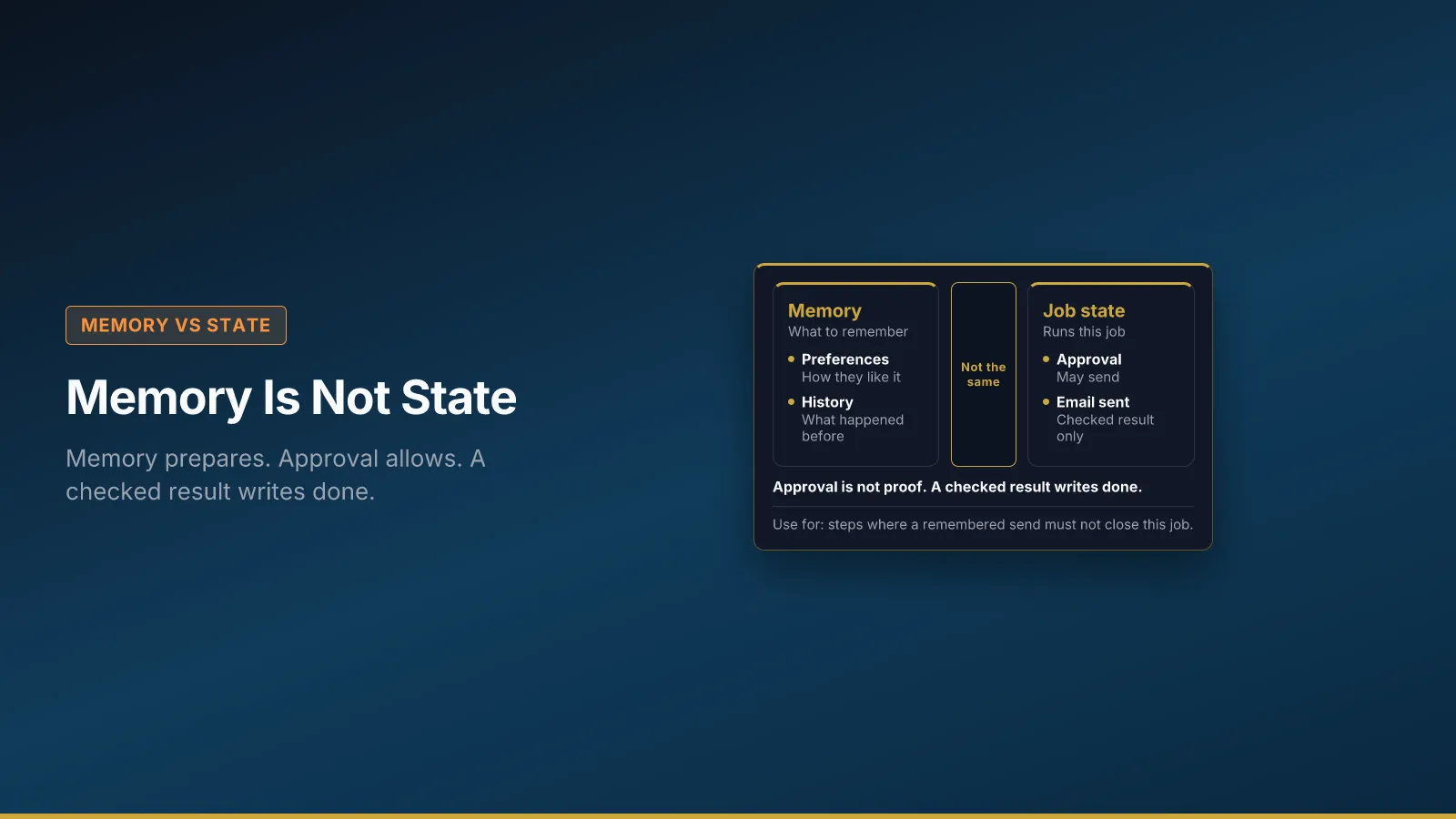
| Prepare | A PDF preference may color the draft. It must not mark the email sent. |
| Allow | Approval on this job may allow the send. A past thread must not allow it. |
| Complete | This send’s checked result may write sent. Last quarter’s thanks must not, and the job record alone must not. |
Name that gate in the path before an agent may advance the step. How to Design an AI Agent Workflow is where it belongs.
Permission is not proof
Approval: approved is not Email: sent. One answers whether this send may happen. The other answers whether this send went out. An approved proposal can sit beside an email field that is still open. The agent may draft and wait. It may not treat the approval as the receipt.
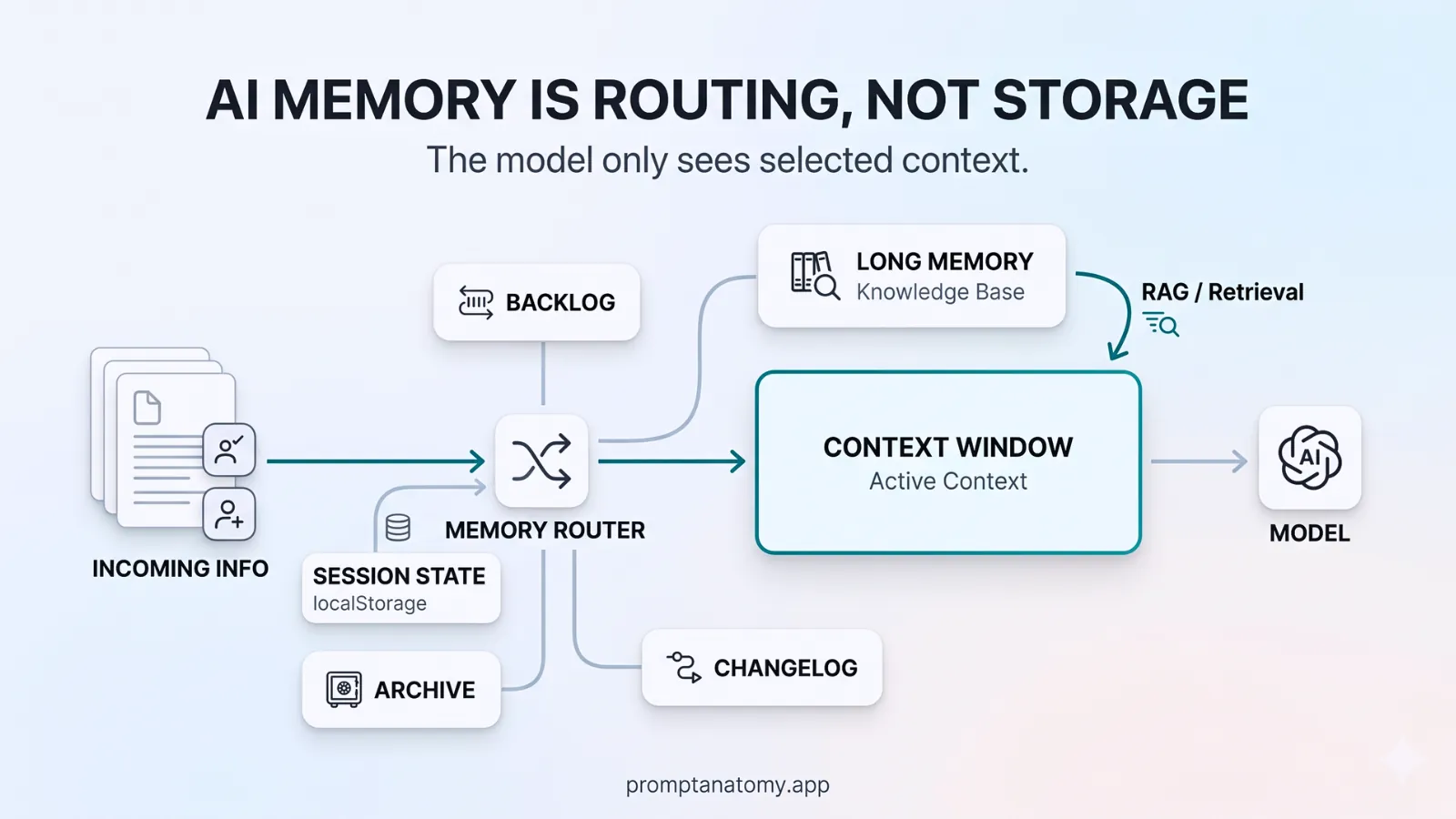
Retrieved memory still enters this run. It does not update the job. How you choose what to keep is covered in Memory Types for AI Systems.
Reconcile before you retry
A send can succeed while the status update fails. If the agent treats “not sent” as proof the email never left, it sends again. Compare the provider result for this message with the email field on this job. If the send result and the job record disagree, reconcile them before retrying or marking the step complete. Write the email field from this send’s result, and do not send again until the field matches that result.
Name the preference that may color the draft. Name the approval that may allow the send. Write sent only from this send’s checked result.