Part 2 — after soft launch. Part 1 covers click-and-do pedagogy: Click-and-Do Before Slide Decks. Agent depth after analysis practice is a tester grant in 3A Before You Build an Agent.
One “data analysis” course fails six jobs. Sales needs forecasts and pipeline honesty. People teams need retention language without inventing HR metrics. Executives need risk-aware summaries, not another chart dump. When every learner pastes the same generic analyst prompt, the failure mode is polished wrongness that looks like progress.
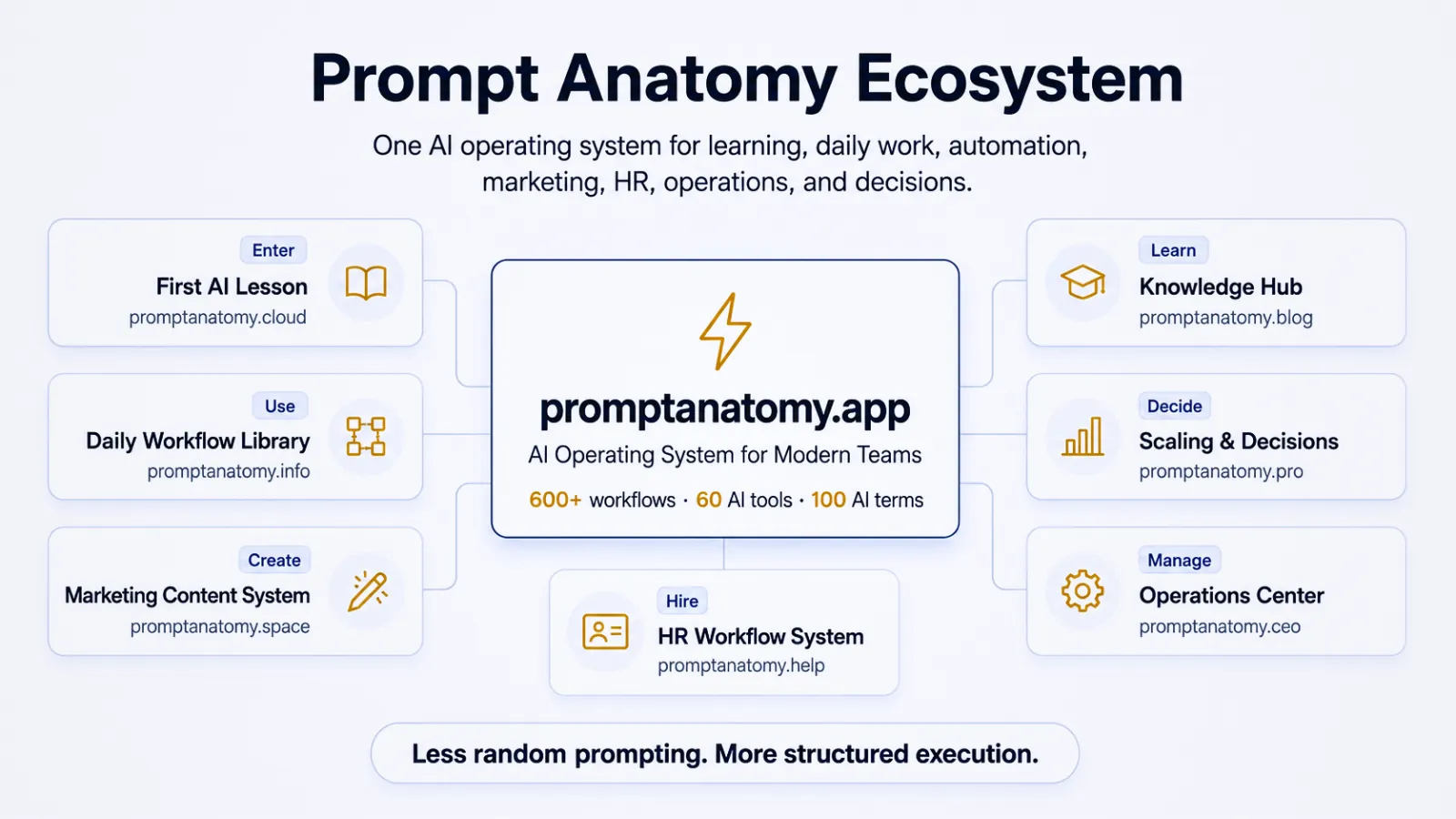
On 2026-07-25, promptanatomy.app shipped v1.4.7—the Data Analysis path. For hub checkout and Modules 1–6, see Shipping Prompt Anatomy. Data Analysis (M7–9) is an operator grant, not a checkout SKU. For how blog vs training fit, start with The Prompt Anatomy Ecosystem Map.
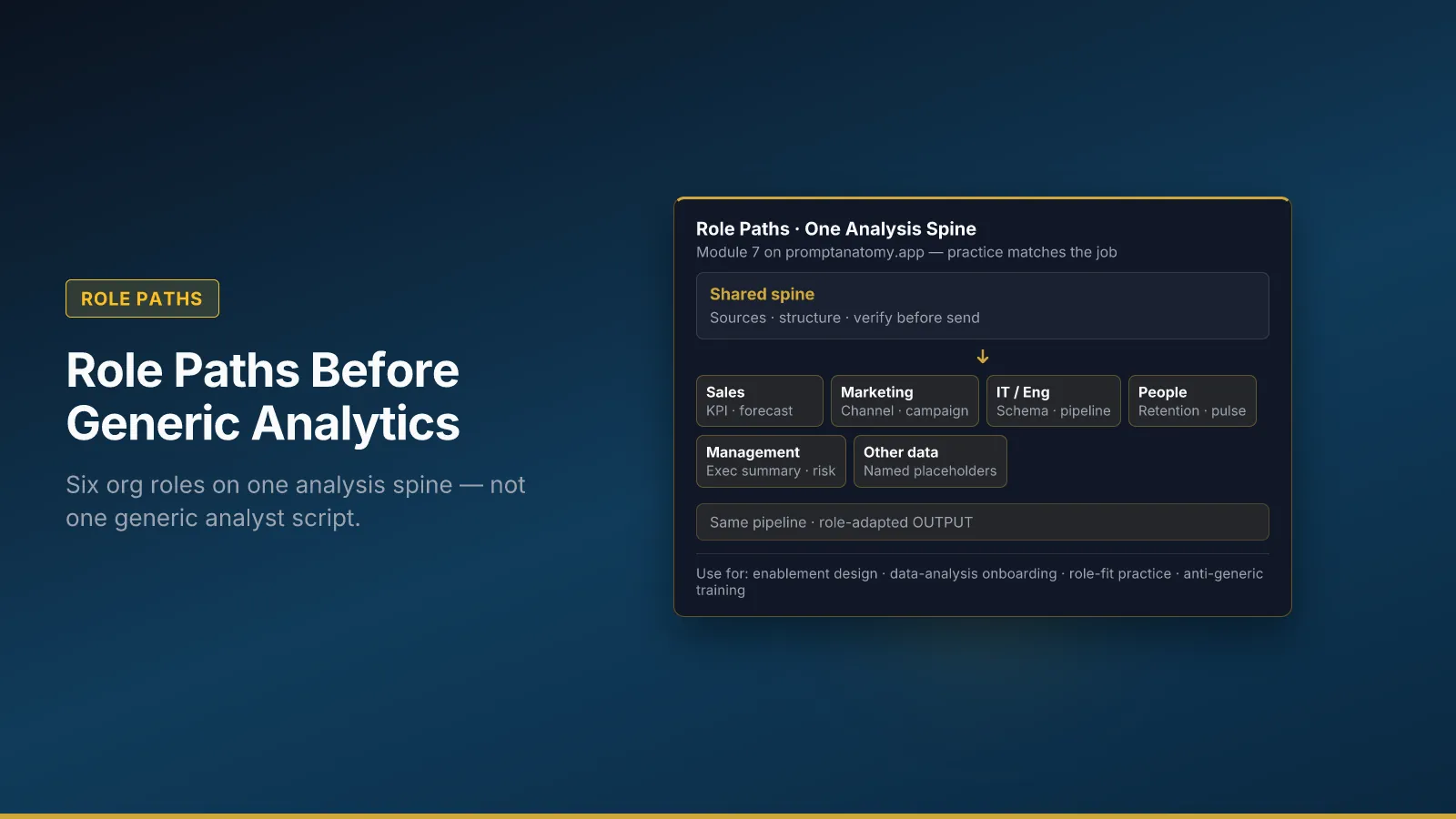
Six roles, one analysis spine
Module 7 teaches the same analysis habits: name sources, structure the ask, verify before external send. The entry choice changed. Learners pick an organizational role; copyable prompts and practice framing adapt to that path—not one default voice.
| Role path | Primary OUTPUT shape |
|---|---|
| Sales | KPI read, trend, and forecast language |
| Marketing | Channel, sentiment, and campaign readouts |
| IT / engineering | Schema, cleanup, and pipeline steps |
| People / HR | Funnel, retention, and pulse language |
| Management | Executive summary with explicit risk |
| Other / internal data | Universal templates with named placeholders |
The spine stays shared so remediation and Module 8 checks still make sense. The prompts stop pretending every learner is a business analyst. Six-block fluency from The Six-Block Prompt System remains the foundation—role paths specialize Output and Quality, they do not replace Meta through Advanced.
Role-fit beats generic packs
Generic analyst copy fails when the job is sales forecast language or HR retention wording—even if the analysis spine is sound. Soft launch made that clear: diagrams beat walls of prose, and v1.4.7 keeps the click-and-do pattern from Part 1 with shorter copy-run-check loops, clearer gates, and interactive schemas as instruments—step through them—not slide titles. Role-adapted copyables answer “this does not sound like my job.”
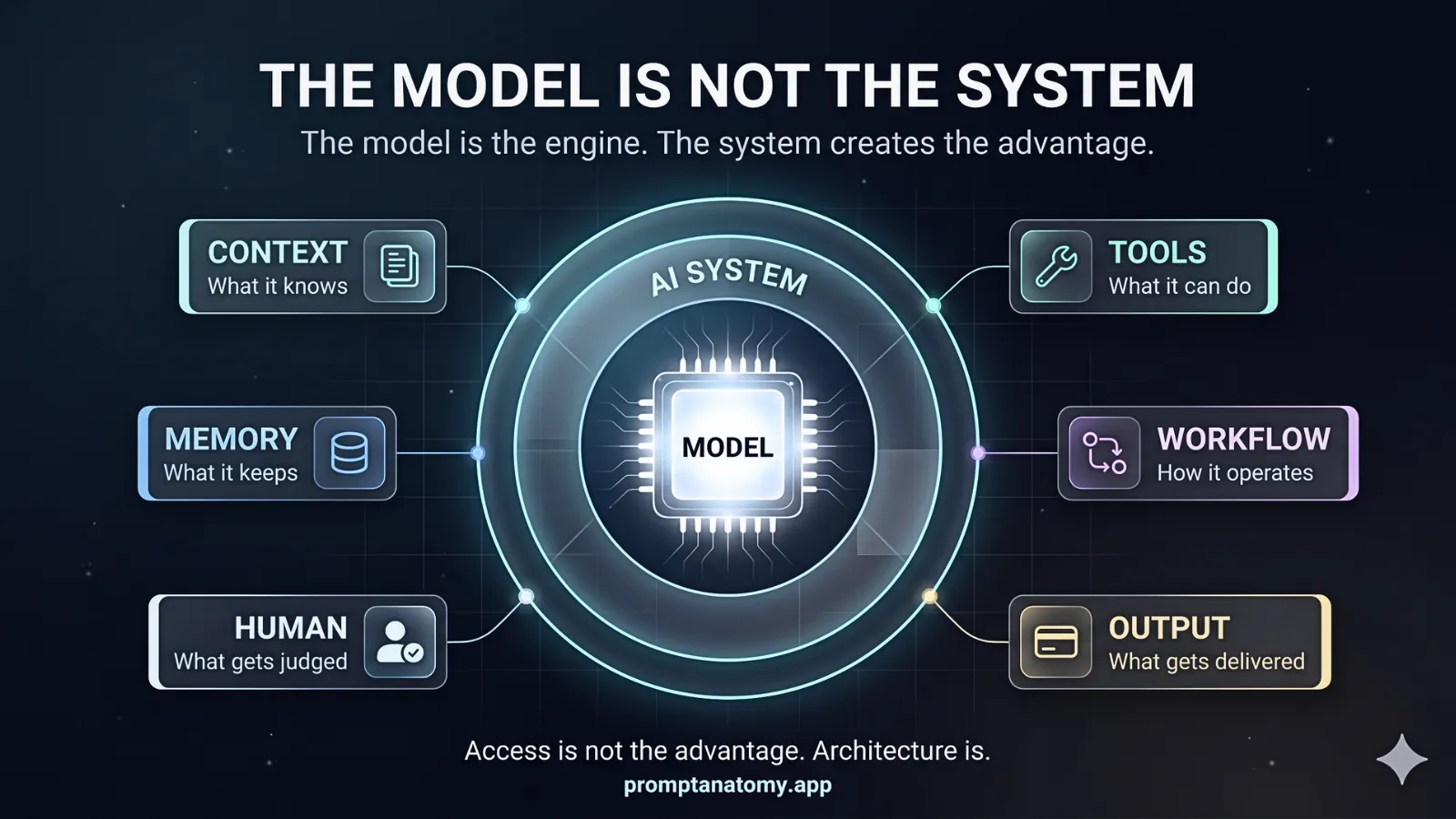
That is practice inside the training product. The Model Is Not the System applies: the lesson host assembles; ChatGPT, Claude, or Gemini execute; your runtime and owners stay on your side.
The Northline mistake, role edition
Northline’s enablement lead (composite) rolled one “analyst” prompt pack to sales, marketing, and HR. Pass rates on Module 3 looked fine. A regional sales deck still shipped a fabricated conversion figure because nobody practiced the sales-path habit: sources named, forecast labeled as estimate, human verify before external send. The fix: make role-shaped analyze-before-create mandatory before teams treat training completion as ship-ready analytics. That failure mode maps to 10 Signs Your Company Is Vibe Prompting.
Guardrails
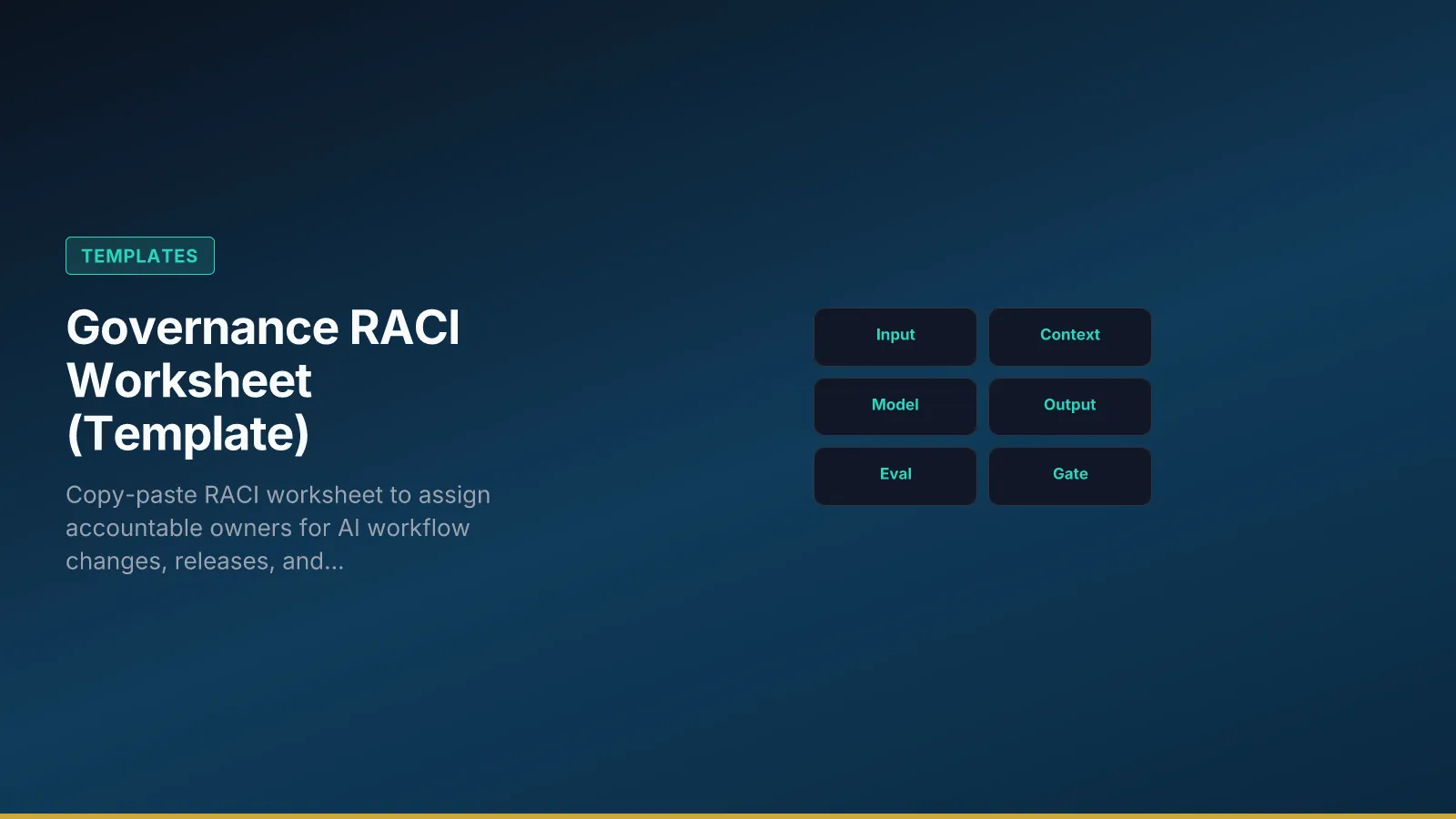
- A Tier 3 certificate or finished Module 9 capstone does not replace workflow IDs, RACI, or eval gates—use Grounding AI Outputs and Evaluation Hooks for AI Workflows on real workflows.
- Do not paste training copy into procurement decks; cite owned metrics per AI Procurement Freeze.
- Pick the role path that matches the job; do not collect all six as proof of maturity.
- Plans and access stay on promptanatomy.app/#pricing—Core assumes Modules 1–6 before the Data Analysis specialization. Checkout does not sell M7–9.
Pick one role path that matches the job on promptanatomy.app. Certificates prove practice depth—not production readiness.