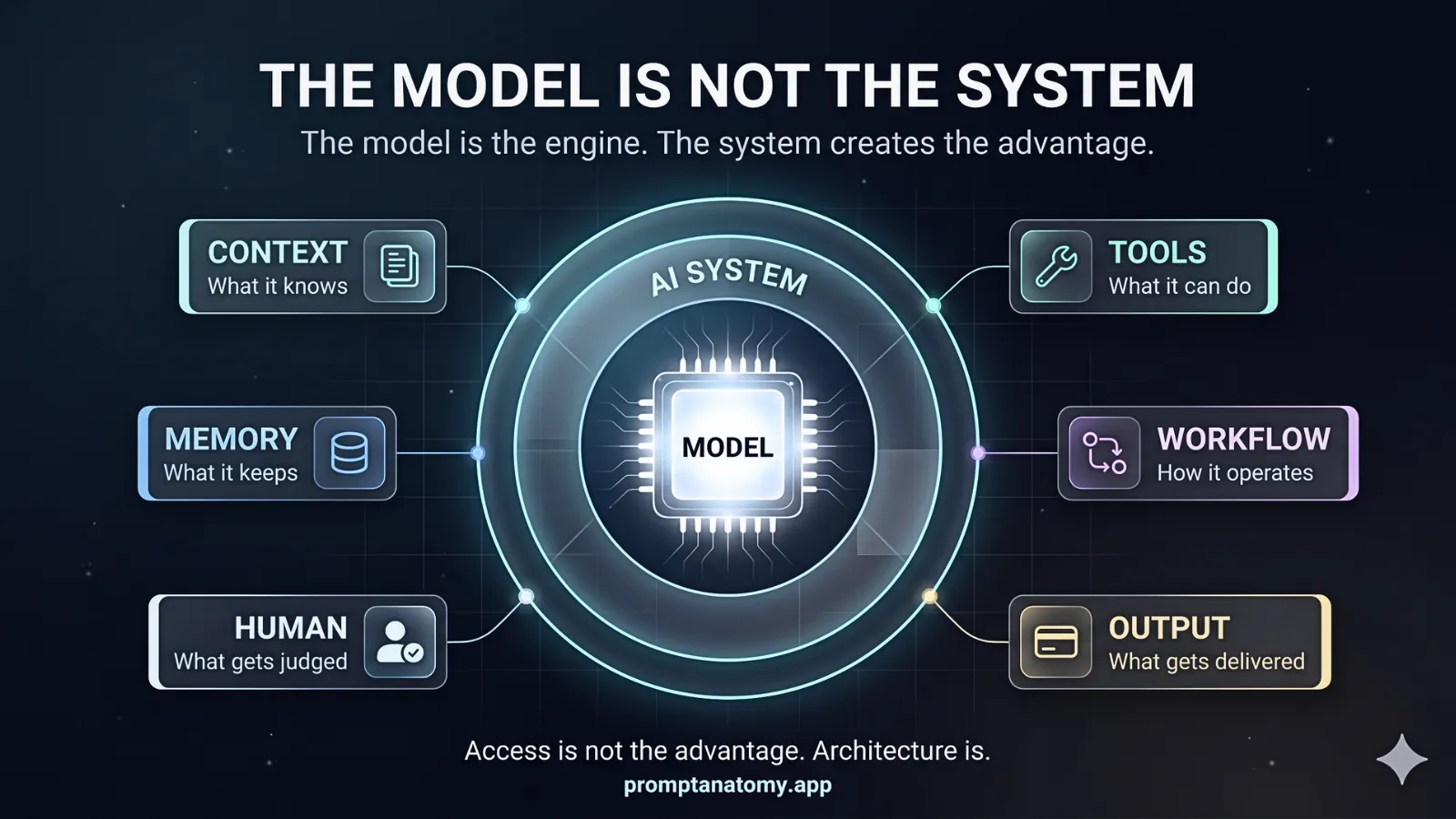
Large context windows sound like a free upgrade: add more documents, preserve more memory, reduce truncation. In real workflows, teams often get the opposite result. Agents become slower, less consistent, and more confidently wrong. This is context rot: useful evidence is still present, but drowned by stale, conflicting, or poorly ordered context.
The key point is simple: window size is capacity, not quality. Without architecture, “more context” becomes an uncurated archive pushed into a single decision step.
If your team is still debating what belongs in the context stack, start with What Is Context Architecture. If your executive narrative is “we bought larger windows so quality should rise automatically,” use Context Window Myths to reset expectations.
What context rot looks like
Context rot usually appears as one or more of these patterns:
- The agent cites old policy language even though the current version is present.
- Multi-step tasks fail in the middle, then recover near the end.
- Outputs include contradictory constraints from two teams’ documents.
- Human reviewers say, “It had the right source but still chose the wrong answer.”
This often gets blamed on model quality. More often, the workflow is sending mixed signals at scale.
Why bigger windows can degrade outcomes
1) Lost-in-the-middle effects
Many models overweight beginning and end regions of long prompts. Critical evidence in the middle gets underused, especially when surrounded by similar-looking chunks. Teams think “we included it” and assume coverage. The model experiences it as low-salience text.
2) Contradiction density rises
As context grows, you increase the chance of multiple versions, partial drafts, and edge-case exceptions entering the same prompt. The model resolves conflict by probability, not governance policy, unless you constrain retrieval and precedence explicitly.
3) Relevance ranking weakens
Retrieval systems tuned for short answer tasks may pass too many “kind of relevant” chunks to agent orchestration workflows. Large windows hide poor ranking performance because everything still fits.
4) Prompt intent dilutes
System instructions and task goals compete with long evidence payloads. If your instruction hierarchy is weak, the model starts prioritizing local phrase patterns over global task objectives.
5) Evaluation masks drift
Teams often keep the same tiny eval set while context size doubles. Scores look stable until live edge cases expose that precision collapsed on specific failure modes.
Northline composite signal
Northline B2B expanded an internal support agent from 12k to 120k token payloads after a platform upgrade. Demo quality remained strong; queue outcomes regressed. Misroutes and policy tone violations rose even though required documents were “included.”
Root cause was not missing context. It was context rot:
- Multiple policy versions retrieved together.
- Chunks ordered by cosine score only, without recency/authority weighting.
- One workflow passing all overrides and notes from prior turns as raw text.
After introducing retrieval scoping, precedence rules, and shorter staged prompts, pass rate recovered within three weeks.
Playbook: prevent context rot
Step 1: Define context classes
Split prompt payload into explicit classes:
- Instructions: stable rules and output contract.
- Authoritative evidence: approved source-of-record facts.
- Session state: current task variables and constraints.
- Ephemera: low-trust notes and prior drafts.
Each class should have separate retention and precedence rules.
Step 2: Enforce authority and recency
For every retrieved chunk, require:
- source ID
- version
- timestamp
- authority level
Then sort by policy: authority first, recency second, relevance third. Do not rely on similarity score alone.
Step 3: Stage long tasks
Avoid one giant “do everything” call. Use staged calls:
- evidence selection
- reasoning/drafting
- verification and policy checks
This preserves salience and makes failure diagnosis possible.
Step 4: Cap per-class token budgets
Set explicit token budgets per context class. If ephemera grows, it should not crowd out instructions or authoritative evidence.
Step 5: Expand eval with window changes
Whenever context budget, retrieval policy, or chunking changes, update held-out eval cases. Add failures from recent overrides, especially ambiguous middle-position evidence cases.
Treat context rot as a release risk: if you double payload size without updating eval, you are flying blind until production overrides tell you something broke. The AI Workflow Eval Checklist includes RAG-specific rows that catch many rot regressions early. Pair remediation with Grounding AI Outputs when retrieval and verification layers need to move together.
Red flags your team can measure
- Retrieved chunk count rises while citation precision falls.
- Median response length rises without better task success.
- Override reasons shift from “missing info” to “wrong choice among provided info.”
- Policy violations occur despite correct source being present.
These are classic context rot signals. Treat them as architecture debt, not operator error.
What to do Monday
- Audit one agent workflow and label every prompt field by context class.
- Remove duplicate/legacy policy docs from retrieval index.
- Add authority and recency sorting before prompt assembly.
- Create five lost-in-the-middle eval cases and run weekly.
Bigger windows are useful when context is governed. Without that governance, larger capacity increases failure surface. Better agent quality comes from deliberate context architecture, not context volume alone.
For the unified grounding model that connects scoping, retrieval, and verification, see Grounding AI Outputs. When you change retrieval tiers or chunking policy, align with RAG in Production eval gates so context expansion does not outpace measurement.