Leaders who hold the room converge conflicting inputs into one defensible call—not one longer dashboard. In mid-July 2026, Prompt Anatomy shipped the Decide spoke at promptanatomy.pro—Executive OS, an open-source CEO/COO decision operating kit that compiles structured prompts for high-stakes allocation and scaling questions, without ever calling an AI API. Source lives in the open sister repo DITreneris/leader (MIT license, Astro static build on Vercel with a GitHub Pages mirror). There is no login; brief content stays in the leader’s browser.
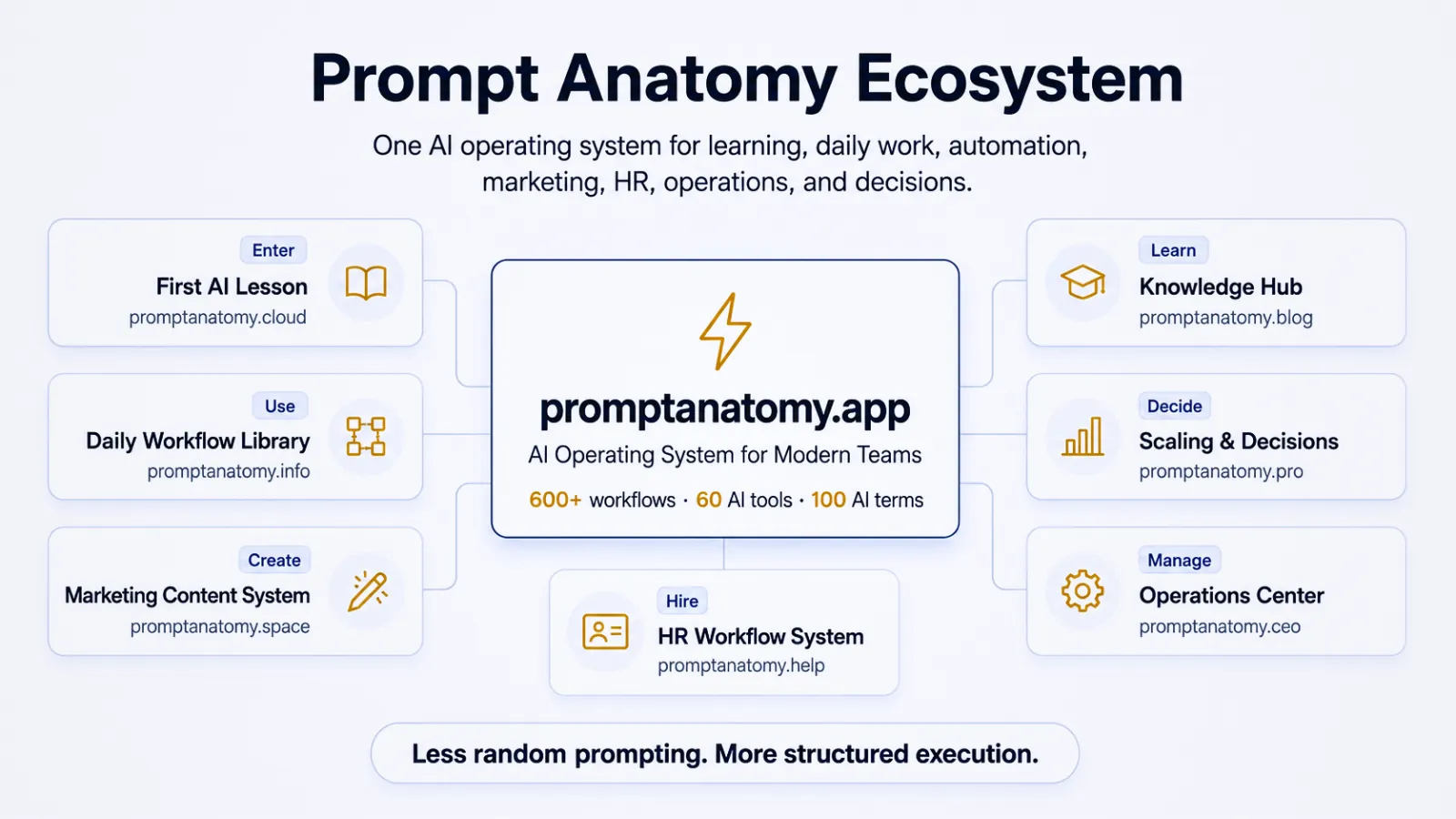
This field note covers what shipped and, more importantly, the line it draws against its closest sibling. If you are mapping properties for the first time, start with The Prompt Anatomy Ecosystem Map.
Where Executive OS started
Executive OS started with a personal note from founder Tomas Staniulis.
Long before the repo, the idea showed up in a room. In my early years as a communication consultant and speechwriter, I spent a lot of time with CEOs and presidents—often on the road, town to town, preparing them for town hall meetings. In 2009, in one of those halls, the pattern clicked: the leaders who held the room were not the ones with the most data. They were the ones who had quietly converged a pile of conflicting inputs—numbers, advisor opinions, field reports—into a single decision they could defend out loud.
I sketched a “perfect CEO tool” that would do exactly that: take the scatter and return one defensible call. But in 2009 the building blocks did not exist—Excel was the ceiling, and nobody had heard of LLMs, prompting, context engineering, or Prompt Anatomy. So the note waited.
Executive OS is that note, finally shipped—now that the method and the models have caught up. The prism on the launch hero is not decoration; it is the original insight from those town halls: many inputs in, one decision out.
Manage is not Decide
The fastest way to misuse .pro is to treat it like promptanatomy.ceo. They look adjacent and do different jobs:
- Manage (
.ceo, repoceo) — the AI Operations Center runs the weekly operating cadence: DAILY, WEEKLY, STRATEGIC briefs that keep runway, pipeline, and blockers in one rhythm. See The Weekly CEO Brief Pattern. - Decide (
.pro, repoleader) — Executive OS structures the harder, less frequent decision: where to allocate, whether to scale, what to stop. It is built around a decision and a defensible rationale, not a recurring status.
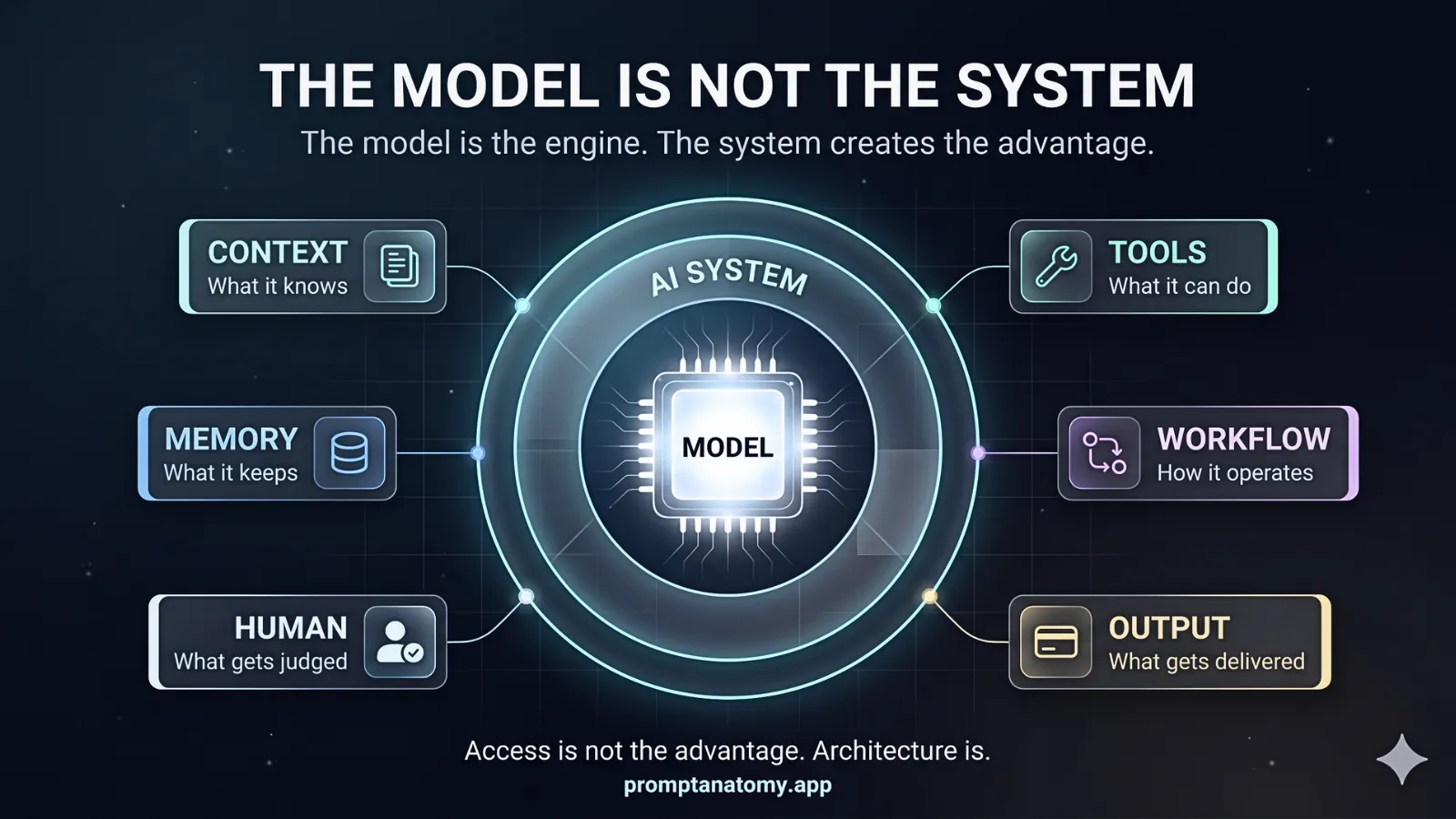
A weekly brief that tries to also be your scaling decision becomes a longer brief nobody acts on. Keeping the cadence on .ceo and the decision on .pro is the same separation-of-concerns discipline we apply to workflows on .blog—the compiled kit is not the operating system; see The Model Is Not the System. Raw signal is not a decision—a dashboard just shows more of it. The prism focuses noise into one beam labeled Decision, not another status view.
The Executive OS decision chain
.pro is a single page whose section order is the method—a conversion ladder from raw situation to a copyable, decision-ready prompt:
- Global Context — four context fields the leader fills once (situation, constraints, stakeholders, horizon). Context is captured before any template, so every module inherits it.
- Executive modules — compile and copy one of six presets or a custom module for the decision at hand.
- Clarity practice — five static scenarios pairing a copyable prompt with a model output, so leaders see what “good” looks like before drafting their own.
- Safety check — a send/risk gate before anything leaves the desk: is this defensible, who is accountable, what is the downside.
- Max Value Kit — a printable PDF (
#kit) for offline decision work, with an HTML fallback.
The page funnels #context → #demo → #kit, then out to training on promptanatomy.app when a leader wants the team to run the same method. A 35-prompt library sits last, on purpose—depth after the decision discipline, not before it.
Why the safety check matters more than the library
Executive decisions fail quietly: a fluent rationale that sounds board-ready but hides an unowned risk. The clarity-practice-then-safety-check order targets exactly that. Practice shows the shape of a strong decision prompt; the safety gate forces the two questions leaders skip under time pressure—can I defend this, and who owns the downside?
That is the decision-stage version of a lesson we repeat for any AI output: the model can draft the argument, but a named human owns the call. And because sponsors fund outcomes rather than fluent memos, pair the kit with outcome framing from From Prompts to Business Outcomes before you scale anything it recommends.
Builder notes (for implementers)
Executive OS differs from lighter static wedges in three ways that matter for brand extension:
- Astro static SSG, open source — MIT-licensed Astro + Tailwind + TypeScript; one English page at
/. - Privacy by architecture — no login and no backend; brief content lives in the browser. The product cannot leak what it never collects.
- Dual deploy — Vercel primary at
promptanatomy.pro; GitHub Pages mirror atBASE_PATH=/leader.
Deploy targets, env tables, and the Max Value Kit PDF toolchain stay in the sister repo (docs/CONFIGURATION.md, docs/SETUP_PDF.md, AGENTS.md)—not duplicated here.
Launch guardrails
Treat .pro as a decision aid behind a human gate, not an oracle:
- A compiled prompt or a printed kit is not a decision; the accountable leader still owns the call and its downside.
- Do not cite Executive OS output as evidence in a governance forum—link the relevant playbook on
.blogand bring pass rate, cycle time, or incident cost on real workflows per AI Procurement Freeze. - Keep the two executive surfaces distinct: weekly cadence on
.ceo, higher-stakes decisions on.pro. Merging them in analytics or CTAs is the same class of mistake as cross-domain webhook mismatches in Classroom Prompt Builder Launch.
promptanatomy.pro gives leaders a structured front door for the decisions that matter most. The job of this blog remains turning those decisions into repeatable, owned team workflows—with owners, eval gates, and audit trails when you are ready to standardize beyond the founder’s desk.